Sarah Seaton
Author Editor Creator of Worlds
Welcome to my website. I am a new crime fiction author. I write complex crime fiction novels. They cover dark subject matter which may push your boundaries, but offer a great alternative read. As well as showcasing books old and new, you will find a lot of information here.
Should you wish to dip your toes into the world of writing crime fiction, click on the Information page for Aspiring Crime Writers where you will find the finer details of death, murder and pathology. For further information about me, see my bio page and Turkey story.
I am an historian, writer and former registrar whose career has been shaped by a lifelong fascination with people, stories, and the past. I taught history at the University of Nottingham, the Workers’ Educational Association (WEA), and for Derbyshire County Council, sharing my passion for history with a wide range of students.
My role as a registrar with Nottinghamshire County Council saw me conducting both marriages and funerals—privileged moments that offered a rare and moving perspective on the human experience, something that continues to influence my writing.
I hold a Master’s degree in History from the University of Nottingham and have authored several non-fiction books, alongside many articles for the Nottingham Post. I am editor of The Nottinghamshire Historian, the biannual publication of the Nottinghamshire Local History Association, and always keen to hear from contributors interested in the county’s rich heritage.
My work has been recognised with the Nottinghamshire Women of Influence Award (2014) and a Queen’s Award (2015)alongside a Civic Award from Nottinghamshire County Council.
Writing remains both a passion and a deeply personal outlet. Whether exploring history or storytelling, I write with the hope that readers will feel as immersed in my work as I am in creating it.Home Life
I grew up in a very male-orientated household, which—whether I realised it at the time or not—gave me an early education in the workings (and occasional mysteries) of the male mind. It’s proved surprisingly useful when writing male characters, though I still reserve the right to question their logic now and then.
My husband, Mark, and I have been together for over forty years—long enough to know each other’s habits, finish each other’s sentences, and occasionally ignore both. Between us, we have five children, eleven grandchildren, and a lively Blue Staffordshire Bull Terrier named Suki, who came to us after the loss of our much-loved Yorkie, Charlie Chubbs, and has firmly established herself as head of the household.
Home is a late-1960s house on the edge of suburbia in Nottinghamshire, where life is quiet but never dull.
When I can escape, you’ll most likely find me in the Fethiye region of Turkey—a place that feels like a second home, where the pace slows, the sun lingers, and stories seem to come a little more easily.Sarah Seaton 2019
My Turkiye Story

In An Unseasoned Soul, Gideon travels to the Fethiye area of Turkey as he follows the trail of a body found in Nottinghamshire. In Books 2 (Justice for the Innocent) & 3 (Nightwalker) Gideon's Turkish friends still feature but it isn't until book 4 (The September Man) that Gideon makes his way back to this beautiful place to work again.My association with the country started in 2002 when I holidayed at Marmaris in the Mugla district with family and friends. It was a brilliant holiday and so, when my father decided to buy a holiday home abroad, my brother Steffan and I told him to consider Turkey. At this point he had already put a deposit down for a house in Cyprus. However, he was moved by my passion for the place and went on a £99 trip to buy a property. It was arranged by an estate agent out there. Dad chose the Calis Beach area of Fethiye (still in Mugla) as he had friends who already lived there.Dad purchased a beautiful villa with pool and we started to holiday there. The more we went, the more familiar the people and places became. I have never met a race of people like the Turks. They are extremely friendly, family orientated and kind. And probably the most honest people that I have ever met. I don't claim that EVERYONE is like this, but on the whole you can't fault them. They are amazing at reading body language, something that we Brits have long forgotten. Once you visit the place, nowhere else compares. The culture, traditions and history are the richest of any country I have ever visited. The worlds first temple and the first farmers came from Turkey. Bodies found at Stonehenge were descendants of Turkish farmers. Many of the ancient Greek characters you hear of originated in Turkey as they were all the same region. Others such as Father Christmas, Saint George, Helen of Troy, even Spartacus was Thracian, which borders the modern day Turkey. I could go on, but will let you discover the magic for yourself.Unfortunately my dad passed away in 2015 so I spent quite a few trips sorting out his property, probate and finances along with my brothers. During this time, I travelled more and visited places that were off the beaten track, especially some of the thousands of ancient ruins the country has. It is an archaeologists dream. Many of the sites haven't had exploratory work done on them due to funds.Turkey is my spiritual home and so I just had to include it in my books with the aim of encouraging people to visit and to educate them about the place. Many of my Turkish characters are based on real people but of course, the stories are fictional, however some of the places and situations are from my own memories and personal experiences out there. I was out in Turkey whilst writing the books. One thing I know for sure, is that in every town I have been to, there is a connection to Nottinghamshire, so it is easy to connect an English and Turkish detective. In Ovacik, there is the Friar Tuck restaurant. In Hisaronu, there was the Robin Hood restaurant and one of the bar owners in Hisaronu lived and went to school in the city and another bar manager has an ex wife and daughter in Nottingham. In Paspatur, one of the men selling handbags lives in Nottingham with his wife and children, as do other waiters throughout the area who go to the tourist areas in Turkey during the summer season then back home to the UK for winter. An old friend of my dads owned a bar in Calis and several others from his home town in Nottingham also lived in the Fethiye area, as of course did he! One of the amazing local Turkish drag acts tours the UK in winter visiting Nottinghamshire several times. So it is inevitable that some of these very people may one day turn up in one of my storylines. And of course, in my home town alone, we have 5 Turkish barbers and a couple of Turkish chippys (not to mention the Alfreton Road area near to Nottingham city centre which is home to Turkish restaurants and shops). The list goes on! I hope you enjoy reading about them. Kitap okumaktan mutlu!
My Books
I am thrilled to introduce you to my debut crime fiction novel An Unseasoned Soul. It is the first book in the English Detective series and based in both the UK and Turkiye featuring DCI Gideon Carr and the Turkish detective Kemal Kaya.
A body is found in a remote Nottinghamshire field. Not fresh. Not known. And impossible to place. Except the evidence says something worse—that it may be linked to a serial killer already behind bars. Detective Chief Inspector Gideon Carr is pulled into a case that refuses to stay local. The trail drags him halfway across the world to Türkiye, where truth is layered beneath heat, history, and danger. There, he is partnered with Detective Kemal Kaya—his liaison, his guide, and a man who reads him too easily. The attraction between them is immediate, unspoken, and dangerous in a place where scrutiny can turn lethal and desire can become a weapon in itself. As the investigation deepens, so does the risk. More bodies surface. More questions refuse to settle. And Gideon finds himself changing in ways he didn’t expect—stripped back, tested, and forced to confront not only the killer, but himself. Back in Nottinghamshire, his second-in-command Colm O’Connor is left holding a fractured investigation together as pressure mounts and the truth begins to splinter in Gideon’s absence. From England to Türkiye, from buried secrets to exposed truths—nothing about this case is clean. And not everyone will survive long enough to see it solved. A dark, atmospheric thriller about obsession, justice, and the cost of crossing lines that should never be crossed.

What Really Happens When You Die?
When I first started writing a crime novel, I realised that there were many things that I had no idea about so as I have researched them I have decided to share some of them with you. From the workings of pathologists, police and forensic scientists through to embalmers, cremators and grave diggers. It is a lot of heavy reading, so I don't expect you to reach the end. I have placed back buttons throughout so you can easily return to the main page.I wish you a happy and informative read!It's not something we like to talk about much. We may know our local funeral parlour, but do we know what really goes on there? Or what an embalmer actually does? Or how long a cremation takes, and how it works? Rebecca Atkinson and Sarah Tavner talk to the people who handle us after death.Dr Clare Gerada General practitioner
When you die, you have to have your death certified by a doctor and a death certificate or a cremation certificate issued. If we have had contact with a patient in the previous two weeks and know the cause of death - if someone has been terminally ill, say - we can sign the death certificate immediately. If we haven't seen the patient in the two weeks before their death, or if they have died after being discharged from hospital, then we must report it to the coroner, who may request a postmortem. The coroner may also request a postmortem if drugs or alcohol are suspected, or if there's any suggestion of a violent death. It's my job to say if somebody is dead, not how they died.
What I'm essentially looking for is brainstem activity. The brainstem is the part of the brain where the body's vital functions are controlled - the breathing, the heart, the brain itself; it is the computer room of the body. If that bit of the brain is dead, then the person is essentially dead. You can still have reflex actions, so you may twitch after death.
To certify that someone is dead, you listen to the heart for one minute and feel for a pulse for one minute. You examine for signs of breathing, you look at the pupils to check there is no response to a shining light. If you're not certain, you can rub on the breastbone, which is a very painful procedure: if they are not dead, they'll quickly jump up and say, "That hurt!"
Nowadays there are machine tests for brainstem death that involve connecting up the brain and looking at the activity. Those tests would be done before organ donation.
Rigor mortis is the stiffening of the body, which begins a few hours after death and then after a while starts to reverse. A forensic scientist can estimate the time of death by whether rigor mortis has come and gone.
Most people will die in bed, but of the group that don't, the majority will die sitting on the lavatory. This is because there are some terminal events, such as an enormous heart attack or clot on the lung, where the bodily sensation is as if you want to defecate. Also, many people die on special occasions. People tend to hang on for a birthday or Christmas. I'm not saying that death is psychologically motivated, but there's a sense that people stay alive for these events and their loved ones, and then pass away, so the death rate increases on birthdays and during religious festivals.
When a death is expected, the ideal place for it is at home, in a familiar environment, surrounded by family. But that is becoming a rarer event. What is becoming more common is people being rushed into hospital for what I believe is a more undignified and worse death, in an anonymous room with nurses who are busy. In my view that is a failure of health professionals, because we should be preparing the families of terminally ill people for death, showing them that it doesn't have to be frightening and that they can do it at home. Palliative care is all about making death comfortable - you do not need to die in pain, you can die in a dignified manner. People worry that having a death at home will be horrible and traumatic for the family, but a good death is like a good birth - it is a beautiful event, not at all undignified.Dr Rob Jenkins Pathologist
Most people who come to me for a postmortem examination will have died from heart disease. In the elderly, strokes and pneumonia are also very common. The young are more likely to die from accidents, suicide or particular types of tumours one gets in youth. If a young person dies, the likelihood of them having a postmortem is high because their death is much more likely to be unexpected. Many older people who die won't have a postmortem because they are likely to have had a known illness that has led to their death.
The first part of a postmortem is an external examination that notes the condition of the patient, any unique identifiers such as tattoos, evidence of recent medical intervention or injuries. Their notes might say "found dead in bed", but you don't know whether they have fallen and banged their head the day before and have a subtle but significant injury, so you are looking out for things like that.
The internal examination starts with an incision from the sternum to the pubic bone. You go through the skin, fat and muscles to expose the rib cage. Then you cut through some of the ribs for access to the upper organs.
When removing the organs you work in three blocks. The thoracic block contains the throat, tongue, lungs, heart and aorta. Then you have the liver, stomach and pancreas in the second block. The final block includes the kidneys, the remainder of the aorta, bowels, bladder and reproductive organs.
The incision doesn't go all the way up to the chin because we don't want anything to be visible to the relatives if they view the body. So, to remove the tongue and windpipe, we work up under the skin from the chest. You loosen the skin up to the jawline, then you can work the blade to cut around the tongue, across the vessels and pull them down under the jaw.
Once you have removed all the organs, you take them to the bench and go through each of the blocks for more detailed analysis. You look for organ weight - a good indication of heart disease will be a big, heavy, often baggy, heart. You look for vessels blocked by clots or fatty deposits. As you slice through the lungs, you are looking to see if there is fluid where there shouldn't be, if there are tumours or evidence of asbestos exposure. If someone had alcoholic liver disease, one might expect a small, shrunken, scarred liver.
Using a scalpel, the mortuary technician will make an incision at the back of the head and lift up the scalp to reveal the skull. A little hand-held saw is used to cut through the skull. The technician will ask you to observe as they take off the skull in case there is something immediately obvious, such as a brain haemorrhage. They will then take out the brain for examination.
Many good things may come from a postmortem. You may find something that is relevant to subsequent generations - say, if a young mother has died and you find a coincidental breast cancer, you would suggest screening for her children.
If you can't find a cause of death from looking at the organs with the naked eye, you take tissue and fluid samples, which are examined under microscopes and submitted for toxicological analysis.
Once you have finished, everything is put back into the body and the incisions are sewn up. It is not possible to re-site the organs into the positions they held in life, but the body is reconstructed as far as possible. It is cleaned to remove traces of fluid or blood. The hair is washed. You complete the cause of death documentation and the body can be released for cremation or burial.John Harris Funeral director
Once the death has been certified, we'll go to the family's home or hospital to remove the body and bring it back to the funeral parlour. Because of health and safety regulations, we have to be careful with manual handling - using stretchers enables us to slide the body rather than do heavy lifting. If someone is being collected from a hospital, they would probably be in a hospital shroud; if it's a removal from a home, they are more likely to be in nightclothes. People don't have the close family networks they used to. It's more frequent these days for someone to have died alone in their house and not be found for two or three days and sometimes two or three months. We have to go in and remove the body, which can be quite an unpleasant experience.
If a body is left untreated at room temperature, it will deteriorate quickly, so at the funeral parlour it will be put into a refrigerated unit until the death is registered. Then, with the family's permission, the body can be embalmed.
With the Muslim faith, an imam will come in and wash the body and wrap it in an unbleached cloth. Hindu and Sikh families will come and do the washing themselves. If the deceased is male, the male family members will come; if female, it will be the women. After embalming, we will dress the body before placing it in a coffin. It depends on the size of the person, but usually two or three people do the dressing. The family usually provide clothing - a favourite outfit or something apt. African families often provide full robes and headdress, and Chinese families will bring spare clothing to go with the deceased on their journey into the next life. So we dress them and put all the spare clothing around them in the coffin.
If the body has been dead for a while and the skin has deteriorated, you have to be very careful. Often, a person may have had a lot of drips and incisions and certain drugs, which can affect the skin, so the skin may be fragile, almost like paper, or weeping. If this is the case, we dress the body in a plastic bodysuit under their clothes to protect the clothes and prevent leakages. Once the body is dressed, and hair and make-up have been done, the body is placed in the coffin and put in a private viewing room. It can stay there for a day, or longer if required. The longest we've had a body in our chapel is 13 months.
A lot of my work is arranging for bodies to go back to their home abroad. About a fifth of our work is repatriation now because of the cultural diversity of the area we are based in - east London. This requires tropical embalming because the body may be kept for longer. Tropical embalming takes longer and uses stronger chemicals. Ghanaian funerals, for example, can be anything from two months to two years after death. We've had bodies here for three or four months before they've been flown home to Africa for the funeral.Karen Koutandos Embalmer
The body is brought out of the fridge and removed from the body bag or the sheets in which it has been wrapped. I gently clean the deceased with a formaldehyde or disinfectant spray. The body might be quite clamped with rigor mortis, so I massage the hands and limbs to work it out, then make an incision to raise an artery so I can inject the formaldehyde. I tend to use the brachial artery under the armpit, or the femoral artery in the groin area, to avoid incisions being seen, which can be stressful for the families when they come for a viewing. As the formaldehyde flows through the body, you begin to get colour and a more lifelike appearance. The features will plump out slightly and the deceased will look less drawn.
If a body is going abroad, the strength and amount of fluid used is increased, to ensure preservation and sanitation for a longer period.
After the formaldehyde, I drain the body of blood and fluid from the organs and chest cavity. I make an incision just under the rib cage and insert a metal suction tool, known as a trocar, attached to a suction pump. I then puncture the internal organs to drain the fluid. I remove the contents of the intestines, bowels and bladder, too, as these can give off gases and smell. I don't come into contact with the fluids. It's very clean and tidy. After I have drained the body, I distribute a litre of cavity fluid between the thoracic and abdominal cavities so that all the tissues are saturated and do not smell. Although the bowels will have already been emptied, I put an incontinence pad on the body to protect the clothing and the coffin.
We have to take out pacemakers because they can't go into the crematorium. Usually you are told that the person has a pacemaker that needs to come out, but if you are not, you can see the incision where it has gone in.
Next, I pack the throat and nose with cotton wool to stop fluid seepage. If the deceased doesn't have teeth, I put cotton around the mouth to plump it out a little; if they have dentures, I put them in place. I then stitch the mouth closed from the inside. Sometimes glue is used but I do not like the white residue it can leave after it has dried. I dry the eyes and insert plastic half-moon caps under the lids to help them hold their shape, and a touch of Vaseline helps to hold them closed. If the eyes are not dried, they can give the appearance of having a tear, which may be distressing to the family.
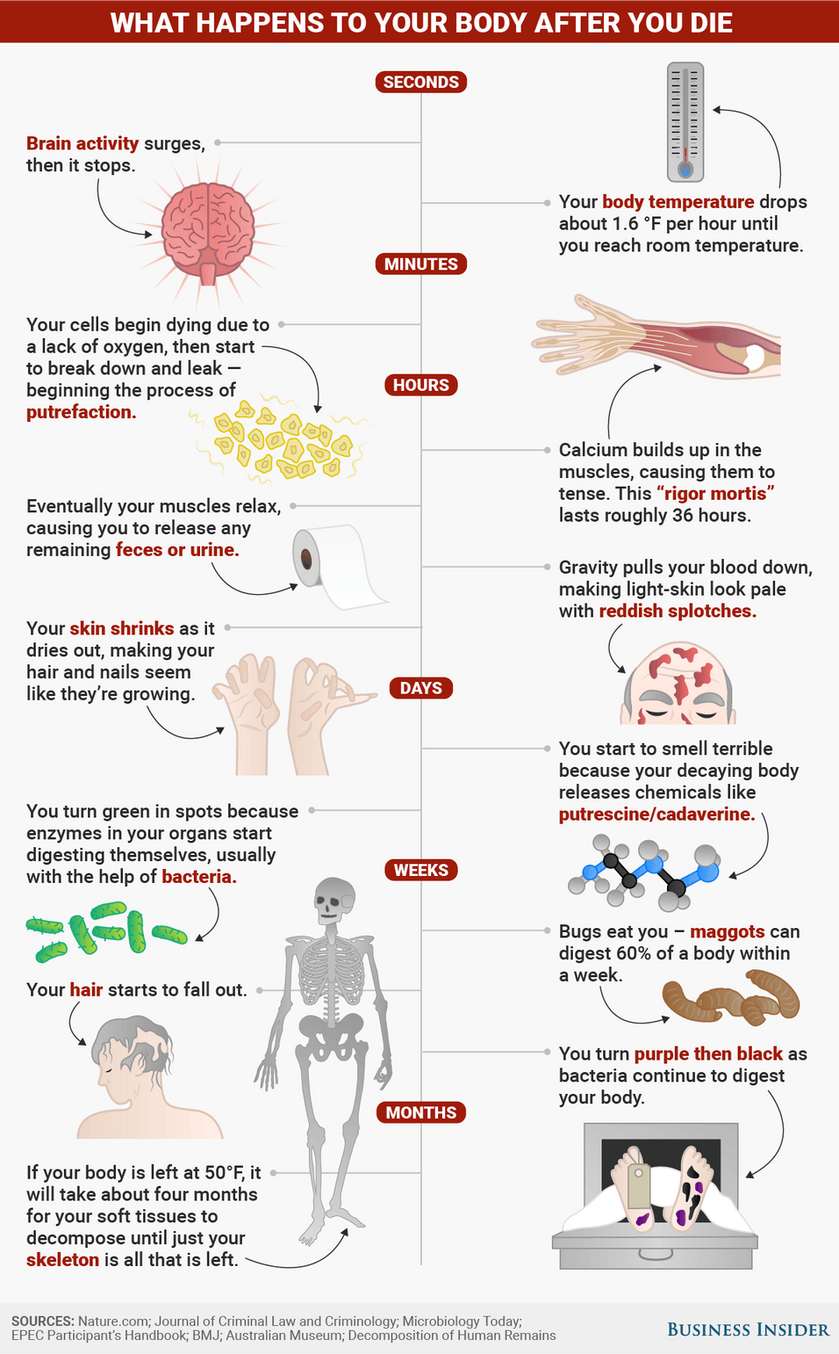
I will wash and style the hair, ensure that the men are shaved and any nasal and ear hair removed. Nails are cleaned and cut. It's a myth that your hair and nails keep growing after you are dead - what actually happens is that your skin retracts, so they appear longer. Even if the family are not planning to view the body, I like to make sure everything is done thoroughly in case they change their minds.
I try to make the face look peaceful because this is the last memory the family will have and I want it to be a good memory. I use very few cosmetics, just enough to take away the "waxy look" that can occur.
Of the bodies that come to the funeral homes I work in, around 90% will be embalmed. The ones that don't will be where the family have refused or the funeral is taking place very quickly. Embalming is an art. The deceased is always treated with respect and I always do the best job I can. I believe that you have to care about what you do. When you stop caring, then it is time to leave the profession.
Michael Brown Crematorium technician
All coffins have a card with a number that is checked against the nameplate on the coffin before cremation. That card goes on the back of the cremator so we can keep track throughout. There is only room for one coffin per cremation chamber, so it's impossible to cremate two people at once.
I often get asked about taking the bodies out and selling the coffins and taking off the brass handles or taking out gold teeth - it's just not done. Everything goes into the cremator. Any metal will melt down and become blackened and mingled with the ashes. You have to be careful with watches, though, because the batteries will explode. The undertaker should have removed any watches before the funeral.
The cremation chamber is fuelled by gas and has to be heated to at least 750C before we can load, or "charge", the coffin. We have to adhere to strict guidelines and everything is logged automatically on the computer - time, date, duration, emissions, smoke levels, carbon monoxide, oxygen levels and the temperature in the different parts of the cremator. The computer prints out a report and every few months these are sent to environmental health.
During the cremation, the coffin burns first, then the flesh and then the organs. After 60 minutes or so, you can look through the spyhole to see how it is going. After 90 minutes, depending on the size of the person, all that is left is the glow of the ashes, no flames. A person with a lot of fat will burn hotter and for longer, up to three hours, whereas a small, frail person may take 80 or 90 minutes.
People think wicker and cardboard coffins are saving the planet, but they burn very quickly instead of creating a slow, even heat like wood. That means you need more heat to cremate the body, so use more gas. It's also more hazardous for us, because they catch alight so quickly and harder on us because we can sometimes see the body through the wicker.
Once there are no more flames, you can stop the cremation and rake it out using a 15ft stainless-steel rake. There are no short cuts. We clean out the cremator every time.
All that is left are the ashes from the body, plus nails and screws from the coffin and any artificial steel joints or metal plates. There may also be some bone fragments left. It tends to be the hip and the shin bones, because they are quite large. There will be more bones if it is a large-framed or young person. Young bones are stronger and reduce less easily. The remains are raked into a steel bin at the bottom of the cremator to cool, before being transferred into a machine called a cremulator, which contains steel balls that grind down the remains into a fine ash. Your ID card goes into the cremulator, along with a plastic urn with your cremation number on it that the ashes fall into at the end. The cremulator filters any artificial joints or metal and these are buried in a deep hole at the back of the crematorium, although we are looking into ways of recycling them.
The cremulator may sound callous, but breaking down the remains is important because if you are going to have a scattering it means the remains can be dispersed as a fine ash rather than as bones, which is less distressing for the family.
We carry out the whole process of cremation and cremulation as if we were doing our own family - with the utmost dignity at all times. It's not right to be slapdash.Gary Burks Cemetery operations manager
If a person buys a grave plot, they have a choice of that grave being used for anything between one and five people. For a single grave, the law requires that the coffin be buried under at least 3ft of earth, unless the ground conditions are suitable and then the shallowest a coffin can be buried is beneath 2ft 6in of soil. The ideal is light, dry soil, not wet, heavy clay. With a grave for five people, the first person would be buried at 11ft and the next coffin would go in at 9ft 6in and so on. You have to have at least six inches between each coffin in a multiple grave.
If a body were buried illegally in a shallow grave less than 2ft deep, the decomposition rate is only 18 months to three years. That's banking on disturbance by small mammals and insects. Whereas, with a proper burial, with the coffin deep in the ground, the decomposition rate is much slower. The ground conditions affect the decomposition rate. If the coffin is sealed in a very wet, heavy clay ground, the body tends to last longer because the air is not getting to the deceased. If the ground is light, dry soil, decomposition is quicker. Generally speaking, a body takes 10 or 15 years to decompose to a skeleton.
Some of the old Victorian graves hold families of up to eight people. As those coffins decompose, the remains will gradually sink to the bottom of the grave and merge. The coffin at the bottom will often be the first to collapse and may pull down the remains above it.
Graves are dug by machine, where possible. On our new sites, where there is more room, we use a mechanical digger similar to the type you might see on the roads. We are told two days in advance what the coffin size will be. So we tailor the grave to fit.
With a reopened grave, or in a traditional area where you have had to move memorials to get to the grave, you are likely to be digging by hand. With good soil conditions, it's possible to hand-dig a grave in 1½ hours. But I've experienced it taking five hours because of roots or hard ground. A dry summer will make the ground very hard for up to 2ft. A hard frost will mean 6in of ground is frozen solid.
For £27,000 you can buy a vault grave. This is the most expensive grave we have. We excavate a big hole and concrete the sides and bottom and then put brickwork and a landing on the top. Generally, the coffin is encased in concrete - or entombed, as we call it. The coffin can be wood, but it must be sealed, usually using lead or zinc. We do this to stop noxious fumes and because we don't backfill the vault, so if you moved the landing off you could look down and see remains in the grave.
Sometimes we do exhumations. The grave owner must obtain an exhumation licence before we can do this. There have been cases of people who have moved away from the area and wanted to take their loved ones with them, or wanted to transport them back to their roots abroad. Some people have an aversion to burial and decide they would rather have a cremation after all.Dean Fisher Resomation technician
One of the biggest problems with cremation is the amount of mercury going into the atmosphere and the ecosystem. In Britain, about 16% of the mercury that goes into the atmosphere is caused by cremations. Resomation is a greener alternative to cremation. It uses water, potassium hydroxide and steam heat to dissolve the body. At the moment there are only a few resomation chambers in operation in the world, all of them in the US - ours is at Mayo Clinic, Rochester, Minnesota - but there has been interest from several UK councils and cemeteries about installing them. It does offer people a greener option.
We place the body in a basket with small holes in it and slide the body into the round resomation chamber. Once you've loaded the body, you input the temperature, body weight and duration. We calculate the amount of chemical needed by the size of the body.
Once the body is in the sealed chamber, it is immersed in around 425 to 500 litres of water mixed with around 15 to 20 litres of potassium hydroxide. A coil running though the unit generates steam, which heats all the ingredients to 150C, and then a recirculation pump creates a whirlpool effect that helps the body to dissolve. All the tissue, muscle, hair and nails inside the unit will dissolve. Resomation turns the body back into its original elements. It breaks down the body and neutralises everything, including the chemicals used to preserve the body, such as formaldehyde.
What we're doing is speeding up the natural process of being in the ground, breaking down the body in hours instead of 20 or 30 years. All that is left at the end of a resomation cycle are bone remains and liquid.
Only certain clothing fibres will dissolve during resomation, though. Cotton will not dissolve, silk and wool will. If you had on an outfit that was half wool and half cotton, you'll see cotton fibres left in the basket with the bone shadows at the end.
With cremation, only large bones will be left. With resomation, all the bones are left. Because the body lies in a basket in the resomation chamber, we can lift out the skeleton bone by bone. These are placed under a heat lamp overnight to dry. What we call the bone shadows, which are pure calcium phosphate, sterile and white, are then placed in the cremulator, which turns the bone into a fine powder similar to white flour - more aesthetic for family members than cremation ashes, which are grittier and blackish-brown.
The innocuous fluid left at the end of the process contains what the body is ultimately comprised of - nitrogen, phosphate, proteins, amino acids, salts and sugars. It's got a greenish-brown tint and it flows just like water. This liquid contains no DNA so has no detectable link with the original body. It can be safely disposed of or used on land as a fertiliser if requested.
I don't think resomation will necessarily replace cremation or burial, but I think it will grow in popularity.Rebecca Atkinson and Sarah Tavner
First published on Sat 16 Feb 2008 00.12 GMT in The Guardian
Post Mortem from start to finish
The purpose of the post-mortem is to establish the cause of death, the extent of the victim’s injuries, the presence of any natural disease and to make a factual record of the findings. Furthermore, the pathologist can offer opinions concerning what may have happened at the scene and when death may have occurred.
This enables the investigator to:
• Identify the victim;• Determine the cause of death and where possible the mode and time of death; • Determine the nature and size of the weapon used and the amount of force used; • Determine the approximate height and stature of the offender.
The pathologist must record full details of the autopsy and document both his or her own actions and those of others that may be significant to the pathologist’s examination.Post-Mortem Attendance
Key Roles, the SIO will also need to decide whether any additional persons should attend. While formal identification of the body is normally undertaken by a member of the deceased’s family, the family have no legal right to attend the post-mortem or have other access to the body until it is released by the coroner. A representative of the family may be allowed to attend the post-mortem at the coroner’s discretion.
Finally, the SIO will need to consider whether or not they will attend the post- mortem. In the majority of cases the SIO will wish to be present at the post-mortem examination. This will ensure that the SIO is always involved where there are interpretational issues or findings that could significantly alter the course of the investigation. In some cases the SIO may wish to send their deputy who must be comprehensively briefed regarding their role and the evidential issues. This decision must be weighed against the other strategic issues that the SIO will inevitably be engaged in. The SIO may wish to attend at the start of the post-mortem and then at the end to be briefed by the pathologist.Sample Types
The SIO, following discussion with the pathologist and SOCO, determines the exact requirements for obtaining forensic samples, based on the initial crime scene assessment. Routine samples, except when the circumstances of the case demand otherwise or samples have already been taken at the scene, may include:
• Anal, vaginal, oral, penile swabs; • Fingernails;• Head and pubic hair;• Blood, urine, stomach contents; • Pre-transfusion blood.
162
In circumstances where the initial information is limited, it would be sensible to adopt the maxim ‘if any doubt, obtain all samples’.
When appropriate, the pathologist should try to ascertain whether or not the victim had been sexually assaulted. This includes looking for evidence of buggery. Vaginal or anal swabs should be taken with a proctor-scope or a speculum to prevent challenges to the integrity of the sample. In cases of possible oral sexual contact, mouth swabs and drainage onto the neck or clothing are likely to be more helpful than analysis of the stomach. In the stomach the acid contents are likely to destroy the DNA in semen or dilute it too much for analysis. Mouth swabs should be taken in all cases irrespective of the absence of evidence of sexual activity as this may only come to light at a later stage. It is as important to look for elimination factors as implication factors.
One of the purposes of the post-mortem is to obtain samples for analysis to detect the presence of drugs and poisons, and to ascertain the blood alcohol level. Routine samples obtained during a post-mortem may also include blood, stomach contents, hair, urine, ocular fluid, bile, liver and lungs as well as a visual inspection of the organs.
The pathologist should make a histological examination of the major organs (assuming that they are not heavily decomposed) in all suspicious deaths. Histology is of value in confirming, evaluating and revising the course of natural disease processes that may have contributed to the cause of the death. Other samples should be taken for histological examination, depending on the circumstances of the case, eg, for the purposes of determining the age of injuries. The reasons for not conducting a histological examination must be fully recorded so that the pathologist is in a position to defend this decision if necessary.Recording the Post-Mortem
The SIO, in consultation with the pathologist and other experts, must make a record of all injuries and assess their significance.
While the use of sound-recording is not envisaged, video recording might be useful, depending on the coroner’s wishes and the views of the pathologist. Video recording can be of value to:
Create as near a complete record of the processes as possible;
Facilitate further examination of the body in its original state;
Assist the process of a second autopsy, if one is needed;
Assist the SIO and the investigation team in understanding crucial elements ofthe post-mortem in specific cases;
Record the removal of ligatures and other devices from the body, wherepossible. These might be best captured by some form of hand-held camera, either video or still, that can be manoeuvred manually to show precisely how a particular device was applied to the body. Such a video might also assist a virtual reconstruction, where this is subsequently deemed appropriate.PATHOLOGY
When still photographs are taken, it is essential to obtain detailed photographic evidence of external and internal injuries. The following general principles apply:
Photographs, including something to indicate measurement (ie, a scale), should be taken of each injury or group of injuries;
Photographs should be taken at an angle of ninety degrees to the injury or group of injuries;
SIOs must ask for specific photographs, the pathologist will certainly do so;
Where the identity of victim is unknown, consider photographing the victim’s clothing, tattoos, marks and unusual scars. Care must be taken when photographing clothing in the mortuary because of the dangers of contamination; clothing can always be described in detail at the post-mortemand photographed after the examination.External examination of the body may reveal surface fragments of material that may be trace evidence, such as flakes of paint, glass fragments, fibre, blood, semen or hairs embedded in wounds. Foreign material may also be present under the fingernails and may include hairs, fibres, skin fragments and blood from the attacker. It is essential that these items are correctly photographed, seized, packaged, labelled and retained. Consideration should be given to using the body as an exhibit and sub-exhibiting all samples taken from it in accordance with the process set out in ACPO (2005) Guidance on Major Incident Room Standardised Administrative Procedures (MIRSAP).The body should be photographed while fully clothed and particular attention paid to injuries and damage to the clothing. Care must be taken when removing clothing from the victim. The indiscriminate use of scissors to remove clothing should be avoided. Undressing the body should only take place in the presence of the pathologist.All clothing should be fully searched and any items found exhibited. Investigators can use body maps to identify the position of injuries, marks, scars and any other distinguishing features. Consideration should also be given to using specialist photography to highlight bruising. If there are a number of bruises or other injuries, the pathologist should give each an identifying number.THE POST-MORTEM REPORT
When the post-mortem examination is complete the pathologist makes a thorough report (which becomes the property of the coroner). The report should be written as soon as possible and within an agreed timescale. The pathologist may make rough notes, sketches and body maps during an examination, although these would not ordinarily be provided to the SIO in addition to the report. Some aspects of the post- mortem, such as examination of the brain, may take up to eight weeks to complete and so delay the final report. In order to allow the MIR to use the information revealed in other aspects of the post-mortem, the SIO should ask the pathologist to provide an interim report. The SIO should, however, be aware that the results of the special tests may significantly alter the findings and hence the conclusions of the final report. In complex cases the pathologist should provide the SIO with a provisional timetable for the production of the final report.
The SIO, or whoever attends the post-mortem examination, should go through the findings with the pathologist at the time of the post-mortem. It is essential that the SIO ensures the pathologist is kept up to date with any investigative developments, even after the report has been produced. If information subsequently revealed by the investigation impacts on the conclusions contained within the post-mortem report, the pathologist should produce a supplementary report incorporating that information and drawing further conclusions.
It is good practice to supply the pathologist with a record of all the exhibits taken, with their relevant exhibit numbers, at the completion of the post-mortem so that an accurate reference can be made to them in the report.
As an overview the post-mortem report should include:
The information the pathologist received in advance of the autopsy.
That the data justifying decisions and actions taken at the examination of the scene and the body have been retained.
Details of all investigations made either personally or by submission to a laboratory for report.
Conclusions and an explanation for those conclusions. Where unusual features are found but are concluded not to be relevant, the pathologist must explain why the finding has been discounted.•The reasoning underlying why, where findings are open to alternative explanations, one particular explanation is favoured.
The reasoning that supports the conclusions, detailing all the material drawn on to support that reasoning, including reference to pertinent and current literature.
All samples that have been retained by the pathologist, whether or not these have been assigned police exhibit references.INTERPRETING POST-MORTEM RESULTS
The post-mortem findings represent a vital ingredient of the crime scene assessment process. In addition to the forensic and pathology (hard science) elements to the post-mortem, the opportunity must also be used to collect the soft science elements, ie, the interpretative facts of the post-mortem, for example, by asking ‘What does this injury mean?’The pathologist will contribute to the interpretation of the post-mortem results by:
Attending any conference called by the police or the CPS to discuss the pathologist’s report and/or other issues involved in the case;
Explaining clearly all the findings and their interpretation in the context of the case;
Considering alternative explanations, testing alternative hypotheses, drawing conclusions and giving advice based on the facts of the case and established scientific principles;
PATHOLOGY
Stating what is required before additional conclusions can be drawn, and demanding that those requirements are fulfilled before any additional conclusions are drawn;
Identifying, clarifying and summarising areas of agreement and disagreement;
Requesting feedback to determine whether those involved in the investigationunderstand the outcomes of the consultations. The SIO may wish to explore the following issues:• Cause of Death – which injury was responsible for death? If there are multiple injuries, which was the fatal injury? Cause of death? Significance of injuries? Degree of force used?• Time of Death – this is vital for setting ‘Relevant Time’, for enquiry parameters. It may prove the suspect could have had access to the victim.• Toxicology – blood/alcohol may provide time of death. Is there evidence of victim drug abuse? Was the victim drugged or intoxicated? Stomach contents may give evidence of lifestyle or sequence of events.• Level of Attack – likely to give an indication of the nature of the attack, the degree of force used and over what period. Was the victim capable of ‘fight or flight’? How many attackers were there? What was the likelihood of the offender being injured? Did the offender intend to kill? Was there evidence of overkill?• Injury Analysis – number and type of injuries. How were the injuries caused? Evidence of defence wounds? Timing of injuries in relation to time of death? Evidence of gratuitous violence? Were injuries caused before or after attack? Are injuries consistent with accounts of witnesses? Is there evidence of bodily contact, eg, bites and scratches?
Murder Site – evidence that the deposition site was not the murder site?
Disguise Cause – attempts by the offender to disguise the cause of death.
Sexual Evidence – what evidence is there of a sexual element to the offence such as rape, oral sex, shaving pubic hair, penile penetration, clothing removal and semen deposits?• Weapon Analysis – type of weapon used, number of weapons, weapon found at the scene?• Lifestyle – cleanliness of the victim, sexuality, drug user, overall state of health of victim, evidence of recent assaults.• Size and Physique of Victim – evidence of being controlled before death? Is it likely that the victim could have posed a threat after being injured? Is the victim right or left-handed? The position of defence wounds may assist. Is the assailant right or left-handed?EXHIBITS
Where instances arise of weapons and other articles being found at the scene, these will need to be taken to the mortuary or to the pathologist for inspection. The exhibit must be properly packaged to avoid contamination, but also be clearly visible. A packaged knife must allow the width and length to be measured. The pathologist must sign the exhibit label of any article examined.
Other material may be of mutual interest to the pathologist and the investigative team; it should, therefore, be preserved either at the crime scene or during the post- mortem. Examples of such articles include:
• Ballistic projectiles;• Extraneous items such as hairs, fibres, blood or semen on the body; • Ligatures (do not cut or undo the knot).DEFENCE AND SECOND POST-MORTEMS
When informed that a person may be charged with murder, manslaughter or infanticide, a coroner may agree for a further post-mortem examination by another pathologist. In order to facilitate the early release of the body, if no suspects have been charged or arrested within twenty-eight days of the first examination, a second, independent post-mortem should be conducted in anticipation of any future defence requirements.
The coroner will not usually object to a further post-mortem examination being conducted for, or on behalf of, any person who may have a proper interest – provided that such further examinations are conducted without undue delay and after proper notice has been given to the coroner. In all cases, the coroner should explore whether a second or subsequent post-mortem may be required. The SIO should cooperate with the coroner in meeting requests from the defence for early disclosure, if this will assist the early release of the body.
Whenever a post-mortem is required on behalf of the defence, details of the pathologist acting on behalf of the defence should be given to the coroner without delay. The post-mortem and subsequent release of the body can then be considered. Defence solicitors will need to establish, for example, the nature of the wounds and cause of death. They will also need to examine the post-mortem report, photographs and any other relevant items. Investigators should ensure that this documentation is available, subject to the coroner’s prior approval.
The original pathologist should always be present and, where possible, the SIO or a representative.
Where a sexual motive is suspected, the SIO should expect the forensic pathologist to examine under the skin so as to identify any bruising. Where this has not been done, the SIO should expect a second post-mortem a few days after the original post-mortem to examine for bruising.
PATHOLOGY
The coroner will decide whether to provide the police with a copy of the report from any secondary post-mortem examinations, but it is normally considered proper to do so. The coroner will retain the second report, and if an arrest in connection with the death is subsequently made, they will provide a copy of the second report to the defendant or their legal representatives.
In the event that significant discrepancies arise between the first and second post- mortem reports, the coroner will, without delay, consider whether to commission a third examination. It will not normally be appropriate to provide a third pathologist with either of the previous reports, or to seek to reconcile the differences between the earlier reports.
The third pathologist should again be independent of the first two pathologists, ie, from a different establishment. As soon as the coroner has decided that no further examination is necessary, the body will be released for disposal by the family or executors.RELEASE OF THE BODY
Home Office Circular 30/1999 relates to the release of bodies in cases involving suspicious death. This circular suggests that, subject to the interests of the criminal justice system, it is the responsibility of all agencies to treat the early release of the body as a priority. It should also be a priority for the SIO in helping the family to cope with their grief. This grief may be compounded because of religious beliefs held in certain communities, eg, Muslim and Jewish, if there is any delay in burial after death. There is also likely to be a natural resistance from some communities, in relation to performing a post-mortem examination. This is usually based on religious beliefs particularly in the Muslim community. These matters require a sensitive response from the SIO who should bring them to the attention of the coroner. Further information in respect of this is available from the Commission for Racial Equality.
The SIO should be proactive in pursuing an early resolution of all post-mortem examinations in cases where a suspect has been arrested or charged.
When the post-mortem report is expected to be delayed, the SIO should liaise with the coroner and pathologist. The SIO should consider the following issues when contemplating the early release of a body:
Whether the identification of the victim is in dispute;
The evidential value of retaining the body;
The needs of the investigation;
The need for a defence or second post-mortem when the identity of theoffender is unknown.When the report is received, the coroner will provide copies of it to all those having a proper interest, including the SIO and any person who has been charged in connection with the death (and to their legal advisers). Any photographic or video recording taken at an examination will also be supplied (these will be made available by the police). The deceased’s next of kin should also be advised that the report is available, if appropriate. See also 16 Family Liaison.The coroner will not release the body unless all those having a proper interest confirm in writing that they have no objection to the body being released (other than those proposing to release the body). The coroner will, not less than five days before the proposed release of the body, notify his or her intention to do so in writing to all those persons who have not confirmed that they have no objection to the release of the body.
If the coroner is advised by the SIO that a person is likely to be arrested within twenty-eight days of the discovery of the homicide, they will not release the body until the person is charged, or until the expiration of that period – whichever is the shorter. The coroner will serve, on any person who is charged, a copy of the report of the initial examination and any records of it.
Where the coroner is initially informed that a person may be charged within twenty- eight days of the discovery of the homicide and it subsequently appears unlikely that any person will be so charged, the SIO should inform the coroner at the earliest opportunity.
Families will want to know details of when the deceased will be released for burial. The FLO should facilitate this request, through the coroner’s officer after consultation with the SIO. The coroner has control of the body and decides when it will be released, and the SIO should ensure that the coroner is consulted and advised about the enquiry. When the crime is unsolved, consideration should then be given to asking the coroner to authorise a second post-mortem examination by another Home Office pathologist. This should normally clear the way for the release of the body once a further independent post-mortem examination has been conducted.
In a homicide investigation the question of organ transplants may arise. In such circumstances the SIO needs to consider the implications of a transplant for the investigation, as soon as possible. They should be mindful of the following points:
In cases of unlawful killing, removal of the organs can only be with the consent of the coroner in whose jurisdiction death occurred.
There will be a presumption in favour of transplant provided that the coroner is satisfied the organ donation will not prejudice the investigation of an unlawful killing. The interests of justice are paramount.
The coroner will inevitably consult the Home Office pathologist assigned to the case, to establish that their examination will not be impaired by the removal of any organs.
The relevance of the removal of an organ should be considered in the context of a second post-mortem examination.
If a person is charged, no organ transplant should take place without obtaining the views of the defendant or a legal representative.
The SIO should take a leading role in gathering opinions and assessing the impact of organ removal on the investigation.PATHOLOGY
RETENTION OF MATERIAL AFTER AUTOPSY
In the past, unnecessary or ill-considered retention of material removed at autopsy, has caused considerable distress to bereaved relatives. The pathologist must consider very carefully whether such material needs to be retained and for what purpose. At present, in criminal cases, retention is referred to in Rule 9 of the Coroners (Amendment) Rules 2005 which states:
A pathologist shall make provision, so far as possible, for the preservation of material which in his opinion bears upon the cause of death or the identification of the deceased.
The Criminal Procedure and Investigations Act 1996 states that any material obtained in the course of a criminal investigation and which may be relevant to the investigation should be retained until the end of criminal proceedings and following completion of any appeals procedure. In general terms, this may be interpreted as the release from detention of a person convicted of homicide.
Certain organs can only be fully examined if they are retained after the autopsy is otherwise completed. A police representative (eg, a FLO), or the coroner or their officer, should explain the reason for this to the appropriate victim’s relative.
Any materials retained must be kept in secure storage and under suitable conditions. Their whereabouts must be properly recorded and indexed in order to ensure easy access, see ACPO Homicide Working Group (2006) Guidance on Police and Coroners’ Approach to Pathology.Information taken from Murder Investigation Manual © ACPO Centrex 2006
Initial Responses from the Police
INITIAL RESPONSE
The actions taken by the first officers attending the scene of a homicide or major incident are critical to the success of the investigation. From the outset, officers should adopt an investigative mentality and approach.
During the initial response it is sometimes difficult to determine if a death is the result of natural causes, an accident, suicide or homicide. If in doubt, investigate as homicide until the evidence proves otherwise.
Initial reports of vulnerable missing persons may also be difficult to assess. Those involved in the initial response should remember that every missing person report has the potential to become a homicide investigation.
Officers should carry out an initial assessment of the incident and send a situation report to the control room which, in turn, will coordinate the deployment of supervisors and additional resources to the incident.
Those making the initial response to an incident should be guided by the following principles which underpin all major investigations:Identify SuspectsThe Preservation of Life
This is the first responsibility for those initially deployed to the scene. On arrival, the condition of the victim should be assessed and if there is any possibility that they may still be alive, first aid should be applied and an ambulance called.
Applying first aid and removing the victim will involve disturbance of the scene and may destroy material. The following action, can minimise the impact of such disturbance:
A sketch or series of sketches may assist;
Observe exact detail of scenes, particularly the location of the victim;
Identify anything which is moved, noting original and eventual position;
Try to effect removal with minimum disturbance of the scene;
Establish a single route into and out of the scene;
Make an accurate record of these facts and report them to the SIO at theearliest opportunity.When a victim is moved from the scene to the hospital, the identity of the ambulance crew and details of the hospital, should be established. Ideally, an officer should travel to the hospital with the victim to provide evidence of continuity and to coordinate investigative actions at the hospital. If it is not possible to send an officer from the scene, an officer should attend the hospital at the earliest opportunity.Priorities for officers at the hospital, if the victim is still alive:Seize the victim’s clothing and other possessions (including mobile phones) as evidence;Establish the identity of the victim;Obtain a pre-transfusion blood sample;
Obtain a medical opinion about the victim’s condition;Obtain details of family, friends or associates who visit the victim, as they may be witnesses or sources of other information;Subject to medical advice, if the victim is conscious, establish what has happened including details of any suspects (this might be admissible in a subsequent trial as a ‘dying declaration’).
A DYING DECLARATION is when:
• The person making the statement has since died or is in a settled and hopeless expectation of death;
• The statement is to be admitted in a homicide trial; • It relates to the cause of death.
36Priorities for the officers at the hospital, where the victim dies before arrival:
Treat the victim as a scene;
Ask the medical staff to leave the victim’s clothing on the body;
In cases where medical treatment has been given to the victim or there havebeen attempts at resuscitation, request that all connecting tubes, needles,plasters and other medical items be left in place;
If possible, obtain an opinion from medical staff treating the victim as to thetype of injuries and the cause of death;
Establish if the victim spoke to anyone before death and make a record of whatwas said.Where officers attending the scene consider the victim to be dead, a police surgeon should be called to formally pronounce life extinct. Pathologists and some paramedics can also perform this function.Note: There have been cases where police officers believed a victim to be dead, only for police surgeons to discover vital signs of life through medical examination. If in doubt, apply first aid and call an ambulance.Where a police surgeon attends prior to an SIO, they should be asked to pronounce life extinct while causing minimum disturbance to the body and the scene.Preserve ScenesCrime scenes are an important source of material for investigations. Physical evidence, however, can be very fragile and easily destroyed or contaminated. It is, therefore, essential that those involved in the initial response take effective action to maximise the chances of recovering physical evidence. To do this, officers must:• Identify; • Secure; • Protect.Identify
The identification of the crime scene is a priority activity.
Look beyond the obvious, as parameters of a scene may well extend beyondwhere the body is found.
Identification of routes taken to and from the scene by the suspect and victim is of equal importance.
Identification of other crime scenes, where there is more than one.
Secure
Prevent entry (other than to authorised persons such as the scenes of crime officer (SOCO), SIO and police surgeon).
Ensure that protective clothing is worn by all those who enter the scene.
Commence a crime scene log
Depending on the circumstances, there will always be a wide range of methods available to secure scenes. Some of the most commonly used are:
o Tape – start with a widely defined area to allow the SIO the best chance of securing all available evidence;
o Stationing officers at entry points – beware of contamination issues that may arise if this is used;
o Blocking access by using vehicles; o Road blocks and road diversions; o Temporary fencing.
Protect
Officers should prevent further human or animal disturbance of the scene, but, leave specialist protection such as protection from the weather to the SOCO and other specialists.
Secure Evidence
In the early stages of an investigation, witnesses are an important source of material. Focused questioning at the crime scene affords an opportunity to secure material by identifying witnesses and other scenes. This should include:
Obtaining details of all persons at the scene;
Identifying witnesses and obtaining an initial account from them, includingdescriptions of those they have seen at the scene;
If they have made telephone calls from the scene, securing the numbers of thephones used and those called, as this will assist to verify witness accounts andtimes;
Recording the index numbers of motor vehicles in the vicinity;
Obtaining a description of any vehicle seen to leave the scene;
Seizing any CCTV images that may have recorded relevant events.Likely sources of witnesses are:• Residents in the immediate vicinity;• Passers-by;• People working in the area;• Family and associates of the victim or suspect.The significance of information provided by the person reporting the suspicious death must not be underestimated.
Note: A person reporting a murder may be a significant witness or the offenderIdentify Victim
The identification of victims enables investigators to instigate actions which may lead to the early identification of suspects. Those reporting the incident and witnesses found at the scene should be questioned to establish the victim’s identity as soon as possible. No attempt should be made to search the victim’s clothing for identification evidence as this may destroy other physical evidence which could identify the offender.
A record should be made of clothing being worn by the victim together with their physical description.
If the identity of the victim is unknown, a search of missing person records should be undertaken to establish if any of the descriptions match the deceased. Visible tattoos or other physical features may also be used to search local records and the PNC.Identify and Arrest Suspects
When homicide is suspected, the identification and arrest of the offender(s) must always be a priority.
Note: Offenders may still be at the scene or may return to it during the initial response.
Where suspects have been identified, the arrest should be made by officers who have not visited any scenes. This will avoid cross-contamination. If this is not possible, for example, if the offender is arrested at the scene by officers who are already there, arresting officers should follow normal procedures for taking suspects into custody but should try to reduce contamination of forensic evidence as much as possible. The fact that the arresting officer has been at the scene should be declared to the SIO as soon as possible.
The suspect should not be questioned in detail about the incident; anything that they say should be recorded as significant statements.THE SIO AND THE INITIAL RESPONSE
SIOs are generally called to the scene of an incident following a situation report from those making the initial response. Depending on the nature of the incident, a great deal of activity may have been initiated prior to the arrival of the SIO. The SIO’s first task on being informed of an incident is to review what has been done prior to their involvement and bring the investigation under their command.Each force will have its own arrangements for calling SIOs to the scene of an incident, together with out-of-hours cover arrangements. Whatever the nature of these arrangements, the first contact is usually by telephone and this provides the SIO with an early opportunity to review what has been done and to take control of the investigation. The SIO should speak to the person in command of the incident, apprise themselves of the situation and be satisfied that the action being taken is appropriate. They should also:
• Ensure that any instructions they give for the preservation of the scene or other fast-track actions are clear and recorded;
• Consider authorising the deployment of additional or specialist resources where they leave sufficient information to enable a judgement to be made;
•Ensure that the person in charge of the incident has a clear line of communication with them should they wish to confer before taking fast-track action as a result of information that may be received while the SIO is travelling to the scene.
In all but the most unusual of circumstances the SIO should attend the scene as soon as possible and take command of the incident.
On arrival at the scene the SIO should obtain a briefing from the officer in charge of the incident. There is usually a large amount of information to assimilate during the initial response and the SIO is likely to issue verbal actions during this period. SIOs should remember that verbal instructions are more prone to misinterpretation than written ones, particularly in the highly pressured environment of an initial response. They should, therefore, make sure that all instructions are as clear as possible. To ensure that they have accurate records of what they have been told and the actions they have raised, SIOs should consider appointing a loggist. Loggists should keep accurate records of:
• Material received by the SIO, its source and the time of receipt;• Any observations, decisions or comments which the SIO intends to later include
in their Policy File (as directed by the SIO);• Actions issued by the SIO, including who they were issued to and the time.
Where it is thought likely that the initial response will be lengthy or complex, SIOs should consider establishing a temporary command team using the resources that are available to them at the scene. This will enable them to manage the various strands of work that will be required to successfully complete the initial response phase of the investigation.
SIOs should review the action taken prior to their arrival. In particular they should:
Satisfy themselves that the scene parameters are adequate and that the measures taken to protect the scene are effective;
Assess the number and type of resources that are needed to successfully complete the initial response and initiate their acquisition;
Instigate any necessary fast-track actions;
Identify all the staff who have been involved in the initial response, includingthose in the control room, and ensure that they are fully debriefed before theygo off duty;
Secure all records made by those involved in the initial response;
Secure the recordings of telephone messages to the police about the incident;
Arrange for a Major Incident Room (MIR) to be opened – local force policy willgovern the location and specification of the MIR and where possible, SIOs should site the MIR near the scene and ensure that it meets the specification outlined in ACPO (2005) Guidance on Major Incident Room Standardised Administrative Procedures (MIRSAP);
Ensure that the victim’s family are aware of the death and allocate a family liaison officer (FLO);
Consider issuing a preliminary press release. By informing the press that an incident has occurred and setting a time for a formal press conference in the near future, the media are less likely to seek information directly from the SIO at the scene.FAST-TRACK ACTIONS
Fast-track actions are: Any investigative actions which, if pursued immediately, are likely to establish important facts, preserve evidence or lead to the early resolution of the investigation.
Fast-track actions are often used during the first twenty-four hours of an investigation, but they may be required at other key stages, for example, where another scene is discovered, a significant witness is identified, or a suspect is identified.
The process of reviewing and updating fast-track actions should commence from the moment an SIO is informed of an incident, when the SIO first attends the main scenes and as the investigation unfolds.
The fast-track menu shown in Figure 4 is not exhaustive and not all items on it will be relevant in every case. It is intended as a guide to the types of strategies SIOs might want to consider early on in an investigation. Specific details of the type of action required under each item on the menu can be found in the relevant strategic section.Taken from Murder Investigation Manual © ACPO Centrex 2006
Smelling Death: On the Job With New York's Crime-Scene CleanersCSI and Law & Order would have you believe that a crime scene empties out after the glitzy detectives are done with it. In reality, somebody else has to come in and clean it all upThere is blood all over the room. It’s on the walls and it has seeped into the cracks in the floor. There are smears of it on the doorknob and bloody handprints on the lampshade, the light switch, and the walls. There is even a large pool of it congealed under a twin-sized bed, where the victim tried to hide. “That’s the thing about a bludgeoning,” says Doug Baruchin, president of Island Trauma Services, a crime-scene cleaning-company in Long Island, as he calmly explains the steps they took to clean up this particular scene, “The blood splatters everywhere.
Crime-scene cleaning is not a glamorous profession, but it is a lucrative one. Last year there were 333 murders in New York City alone. Considering that companies like Island Trauma clean up crime scenes, natural deaths, and hoarder homes in the entire Tri-State area, they tend to keep busy throughout the year. In 2013, the company, which employs approximately 30 people (some of whom work part-time), made more than $500,000 in profit.* An individual working full-time as a biohazard technician can make between $35,000 to $80,000 a year depending on what biohazards they’re trained to work with, according to a 2012 industry report.
Baruchin is a tall, tan man who looks as if he probably hits the gym three days a week and sometimes on the weekends. He has about an inch-and-a-half of brown hair that he styles neatly and combs back. However, on that warm morning in May, it was hard to tell what any of the Island Trauma team looked like. Dressed in full cleanup gear, they were ready to begin work on a “decomp” in the Bronx—a body that wasn’t discovered for some time.
Because they work with biohazards like blood and human waste, employees have to shield every inch of their body. Getting ready for a job can be tedious. First comes a white head-to-toe Tyvek suit. It is designed to keep biohazards from getting in but it also keeps body heat from getting out. Twenty minutes into a job and you’re already sweaty.
After the Tyvek suit come booties over the shoes, a pair of rubber gloves taped at the wrists to keep contaminants out, another pair of larger rubber gloves over the initial pair, and finally, a mask that extends over the head and covers the eyes and mouth. It has two medium-sized holes on the sides for little round filters. “It helps you breathe, but it doesn’t do much to keep the smell out,” says Nils Renner, 40, Baruchin’s associate.
Crime stories and detective work have always had a large audience, from Sherlock Holmes novels to CSI and Law and Order, but people often forget that someone else comes in to clean up after all the forensic work is done.
Baruchin, 48, has been in the crime-scene-cleaning business, or “biohazard cleaning,” as it is formally known, for about three years. He started Island Trauma Services under the umbrella of a reconstruction and renovation company that he had been working with for nearly a decade. Since then, Island Trauma has grown to employ several technicians and gets jobs from all over the Tri-State area.
But cleaning crime scenes isn’t all that Island Trauma Services does. Baruchin is quick to point out that most biohazard companies don’t just clean up after crimes. They’ll disinfect anything that might involve biohazards, such as a homicide, a suicide, an unattended death, or the home of a hoarder. “Anything that most typical cleaning companies won’t do, people call us for,” he says. It’s hard to describe the smell of death. It makes your eyes tear and can make the strongest of stomachs churn. It’s strong enough to creep through a gas mask designed to keep the air you’re breathing clean
This smell is what greeted Renner and Baruchin as they entered the Bronx apartment. At this job, the decomp, the man had died in his bedroom. By the time the Island Trauma team got into the apartment, his body had been cleared but the decomposition was left behind, all of which had congealed and hardened on the bed. The electricity was turned off and pigeons had crept in through an open window, leaving droppings and feathers all around. The only piece of furniture in the bedroom was the mattress the man died on. The smell had penetrated the walls. “That smell, it hits you right in the face, doesn’t it?” said Baruchin.
On average, a job can last from anywhere between 10 hours to two days. At a particularly gruesome scene involving lots of biohazards, the first hour or so is spent setting up a control room, an area where the team can enter and exit the scene without dragging dangerous waste out. They cover everything in plastic sheets and sometimes hang it up on the walls.
Since the death in the Bronx was natural and contained to one area, Baruchin and Renner didn’t have to spend much time setting up a control room. They placed their supplies in an adjoining room, covered two tattered armchairs in the living room with large plastic sheets, and got to work.
“I keep stepping on these damn coconut shells,” mumbled Renner as he taped biohazard-removal boxes together while dodging the numerous butternut squashes, coconut shells, and tarot cards strewn across the floor. “This is definitely a bit strange,” he says, eyeing the tarot cards, “but not the worst of what we’ve seen.”
In contrast to Baruchin, Renner is strikingly tall and thick around the waist. His wavy dark brown hair hangs just above his shoulders. He has silver hoops in each of his ears and so many tattoos on his arms that it is difficult to discern where one ends and another begins.
It’s not easy to pick out a crime-scene cleaner on the street. But when people find out about what Baruchin and Renner do, the questions they’re asked point to a morbid curiosity about their profession. “If I say I’m a crime scene cleaner, almost always the response will be to ask if I have any pictures,” said Renner laughing.
Most of the Island Trauma team’s work involves the bereaved or people going through emotional upheaval, which is the most difficult part of the job, explains Baruchin. “Some people will be in shock, some will break down, some people will get in there with you and clean because it was somebody they knew. That’s probably the hardest thing, but if we’ve done it right, it’s a hug-fest by the end of the job.” Even the hoarders—the most common type of job that they get—often behave as they do because they’re mourning a loss, Baruchin says
Back at the Island Trauma Services headquarters in Ronkonkoma, Long Island, Baruchin continues to calmly flip through photographs of the bludgeoning scene as he describes the measures they took to clean the room. What eventually makes him pause isn’t the blood on the walls or the mess on the floor. It’s a photograph of a purple teddy bear.
Anything that gives personality to the dead affects crime-scene cleaners—things like a neatly folded jacket hanging over a chair, a Victoria’s Secret bag from a recent shopping trip, a pot of macaroni and cheese with the wooden spoon still in it. “It’s like someone literally hit the pause button on someone’s life,” says Baruchin. “It’s actually one of the most serene things you could see, a preserved moment in someone’s life, but when you think about the death part of it, it can get upsetting.”
Renner adds, “It can be very surreal, or freaky, kind of like a snapshot because you can actually picture what the person was doing right before they were killed or died.” Both men say they prefer to know as little as possible about the victims
At the Bronx apartment, Baruchin and Renner were finished prepping the control room and were ready for the cleaning.
Bulk cleaning usually comes first, which means they clean up areas of blood, brain tissue, and other biohazard materials. In this particular case, it also involved removing hundreds of bugs from the mattress. Bulk cleaning can involve ripping up carpets and breaking apart floors to get to anything that may have trickled under. Hardwood floors are the trickiest because material can seep into the cracks between the strips. In such cases, Baruchin sprays the floors with an enzyme or peroxide that foams up indicating whether blood is present or not.
At this scene, after cutting apart the bed and stripping away layer after layer of cloth, cotton, and springs, Baruchin and Renner found more blood and waste. It appeared to have soaked through the floor even though the enzyme spray had not reacted positively. “I just don’t believe that this isn’t blood on here, so we need to double check, just to be on the safe side,” said Baruchin.
Using a circular saw, he removed a small chunk of the wood floor and sprayed the second layer of wood underneath with the enzymes. It immediately started to foam. “Aha! I knew this was contaminated!” he shouted victoriously.
After the bulk cleaning comes the basic cleaning and sanitizing. The Island Trauma team uses hospital grade disinfectants that require a certain amount of “kill time” (once they’re used, it’s a few hours before the room is safe again). “[The disinfectants] kill things like HIV and hepatitis. The most important thing is to make it safe for the people that come back in,” said Baruchin
Four hours after they started cleaning up the Bronx apartment, Renner and Baruchin were nearly done. They had discarded the bloody bed, cleaned the floor, removed contaminated wood, and disinfected everything that they could.
In New York State, all regulated medical waste (anything with blood or pathogens) has to be disposed of safely and properly. Similar to syringes in doctor’s offices, Baruchin’s biohazard waste goes into a red bag and then into a red box. The waste then has to be taken to an authorized facility and incinerated. So far, they had filled up six red boxes at the Bronx job.
Renner was on his knees gathering discarded wood from the floor that Baruchin had taken apart when he sat up and pointed to the door, signaling that he needed a break. Stepping out of the bedroom and into the control room, he peeled off his mask, gloves, and suit one by one until all that was left were his t-shirt and shorts. He inhaled deeply and scrunched up his face, “It smells worse in here now!” he yelled over to Baruchin, who was also removing his mask.
“Yeah, it’s definitely stronger, but this isn’t as bad as it normally gets,” replied Baruchin, “We’re lucky that it’s been so long and the windows were open.”
Baruchin said the smell reminded him of old Parmesan cheese. “Anytime I go to the grocery store with my girlfriend and I pass the cheese section, I think, ‘Is that a dead body?’”
“You’re right!” chuckled Renner as he began suiting up again. “You know what? The smell is pretty hard to describe, but once you’ve smelled it, you’ll never forget it and you’ll always recognize it.”Taken from The Atlantic July 8th 2014 Saira Khan
When A Child Goes Missing
Safeguardinghub.co.uk ©2017-2020Address: 34 New House 67-68 Hatton Garden London EC1N 8JY United Kingdom Email [email protected]
This article is by the Safeguarding Hub and follows on from their post ‘Missing Children – what you need to know’, which looked at the reality of missing children in the UK and the expectations on agencies when a child is reported missing. When a child is reported missing the lead agency is the police. In this article we take a comprehensive look at their role and what procedures they should follow to locate a child safely.
What will the police do?
On receipt of a missing child call, the police should obtain full details of the child, including age, gender and descriptive detail. They should also establish the circumstances of how, when and where the child went missing. They will also want to know about specific risks relating to the child, e.g. whether they may be at risk of sexual exploitation, might self-harm, may be suicidal or involved in gangs etc. Once they have these details they should despatch an officer to the scene. This officer is known as the Initial Investigation Officer. However, in some cases where there is no apparent risk, a police officer might not be deployed, and details are obtained over the phone. Police generally use the term MISPER (MISsing PERson) to describe a missing person.What actions will the officer at the scene take?
The initial investigating officer should carry out the following actions:
establish the circumstances andgather detailed information about the missing child. This will include their lifestyle, any physical or mental health issues, medication taken, habits etc.
confirm if the child has taken anything with them e.g. clothing, mobile phone, passport, cash or bank card
identify and where possible, speak to the last person(s) to have seen the missing child
carry out a search of any premises that are relevant – this may be the person’s home address, workplace or other building connected to them e.g. lockup garage, school
consider seizing items belonging or used by the missing person such as computers, mobile phones, diaries, bank statements if relevant
ask for details of any social media accounts used by the missing child. They may also need access to usernames and passwords
obtain a photograph of the missing child. This should be a recent photograph and one that bears a current likeness at that time. It is often useful if 2 or 3 different photographs are supplied. Ideally any photograph should be in a digital format but where they are not stored digitally, the officer should take hard copies
consider obtaining biometric evidence – this is physical evidence of the missing person’s identity such as DNA or fingerprints (see below)
pursue or instigate any immediate and relevant enquiries, that might lead to quickly locating the missing young person. Dependent on the level of risk this could include the deployment of specialist police units such as a helicopter, search dogs, search and rescue units
make an initial assessment of risk
inform a supervisor – in high risk cases this should occur immediately
Where police assess and deal with a missing child they believe is ‘no apparent risk’ some of the above action may not be relevant. However, regardless of the risk grading, police should always:
create a record of the missing incident – this can be on the force’s command and control system, and/or a specific force missing person system
set out a plan of action to locate the person – an action plan will generally be undertaken by police, but the reporting person may be directed to carry out certain actions, depending on the circumstances of the incident
ensure that the missing person is circulated as missing on the Police National Computer (PNC)
make a notification to children’s social careWhy do the police search the address?
It is best practice for police to search the missing child’s home address. However, police have no legal power to enter and search private premises in missing person cases unless certain criteria apply. In most cases searches are conducted with the consent of the owner or occupier of the premises. Any consent should be obtained in writing. Where consent is refused the police will record the refusal and the reason for it. However, where a police officer has information, which gives him/her reasonable grounds to believe that someone inside is at serious risk of harm, they may enter to save life or limb, or prevent serious damage to property (S17 Police & Criminal Evidence Act 1984).
Our Comment: Searching can get many people riled. Parents often wonder why police are looking under a bed or in the loft when they should be out there trying to find their child. Many care home staff and foster carers also question why they routinely go through the same process for a regular repeat missing child, sometimes on a nightly basis. The important thing to remember is that a missing episode can be the first indicator that a serious crime has occurred or is in progress. There have been many high-profile cases where missing people have either hidden themselves, or have been concealed by others in their own homes. When we provide training to police officers, our message (as dramatic as it sounds) is that the starting point for every missing episode should be – “THINK HOMICIDE”, until you are reasonably happy that it is not.
Another bone of contention is the extent of the search. Police officers searching a child’s bedside drawers frequently get comments from worried and irritated parents/carers such as “you are not going to find her in there are you”. They are right of course but the search isn’t just about physically looking for the person, it is about identifying items that may assist in locating the person – diaries, phones, documents, passport, suicide notes etc. The extent and invasiveness of a search should be influenced by the circumstances of a case. Police officers should remember to be professional in their searching. It is easy for police officers to fall into the trap of not searching properly because it is the third time the child has been missing from the care home in 7 days. It is not just about a ‘room search’ and a ‘toothbrush collection’ (for DNA). It is an investigation into a person’s disappearance regardless of how many times they have been missing before.Why do police take Identification samples?
Fatalities from missing person cases are few (compared to overall numbers). However, the reality is that each year a small minority of people never return and are later discovered deceased. The discovery of a missing person’s body may be many years after they disappeared. Many police forces have open missing person cases dating back 60 years. Samples taken for fingerprinting or for DNA testing are required for identification if a body is located and identification is not possible by other means. Police will normally take items for DNA testing, as it is rare to take items for fingerprint evidence. The items should have been used solely and recently by the person who is missing – a toothbrush, hairbrush etc. Where a missing enquiry becomes protracted or there is a suggestion that the person has taken their own life, police should also obtain the dental records of the missing person.
Our Comment: There are some people who believe the police just love to take the DNA, just to get “someone on the system”. This is incorrect in missing person cases. Any item taken in the course of a missing person’s investigation is NOT placed onto the criminal National DNA Database (NDNAD). Where a person is missing for a while and there are concerns over their safety, a decision will be made to send the source item (e.g. toothbrush) to the Lab to obtain a DNA profile. Once a DNA profile has been successfully extracted then this profile should be transferred onto the Missing Persons DNA Database. This is separate from the criminal database and purely used to match missing people to any unidentified bodies that are found. Very few cases make it onto the Missing People DNA Database each year and the vast majority of items collected from address searches by police should either be returned to the owner or are destroyed, without ever seeing the inside of a forensics laboratory.Do they need consent?
A missing person enquiry is not a criminal investigation. Police do not have any legal powers when it comes to missing people, unless they suspect that the person’s disappearance is due to criminal circumstances. Where there is no such suspicion then police will require consent to:
search addresses
take samples for identification;
seize items and property (diaries, computers etc)What will the Police supervisor do?
A police supervisor should have oversight of the missing person’s report, ensuring that the initial risk assessment is reviewed, confirmed or where necessary lowering or raising the original risk level. They should also set a proportionate investigative strategy and ensure that enquiries are actioned. Supervisors will normally be of Sergeant and Inspector rank. In many forces, the initial investigation will sit with frontline uniform teams, whereas in other areas it will be progressed by specialist missing person units or CID teams. It is therefore important that parents, carers or other agencies involved in the child’s welfare, quickly identify the police unit dealing. This works both ways and police should make contact with the primary carer and social services if the child is ‘Looked After’.How do the police assess the risk?
The way police assess risk towards missing people changed in 2016, when the then current guidance was replaced by the Approved Professional Practice (APP) for Missing People. Previously, missing people had been classified into three main risk categories – Low , Medium and High. No one under the age of 18 years could be classified as Low Risk “by virtue of age”. In 2013 some police forces had also introduced an alternative way of dealing with missing person reports and reducing the overwhelming demand missing person cases were placing on police forces. This was called Absent and an absent person was defined as “a person not at a place where they are expected or required to be and there is no apparent risk”.
Practices differed slightly between forces, but basically a person considered absent, would be assessed for risk and if there was no apparent risk, then the force would simply monitor the missing episode until the person returned. In most cases the police would not deploy, nor would they actively look for the absent person. Not all police forces adopted Absent, but those that did generally had a specific cut off period before they decided that the child should no longer be Absent, but instead should be considered missing. Timescales varied in forces but were usually between 24 and 48 hours. At the cut-off point the force would ‘revert’ the child from Absent to Missing and police would begin an investigation.
This was an odd set up, for a child who was considered Absent (no apparent risk) for a set period of time, who was then re-classified as missing would automatically be classed as a Medium risk person, because police rules did not allow them to be Low risk. If a missing person is classed as a Medium risk, then this means that there is a likelihood of harm to that person. This meant that a child could be considered as no apparent risk for 24-48 hours with no active police intervention, then as the clock ticked over the 48-hour mark, suddenly jump to someone who is likely to suffer harm and requiring a robust police response. This if you think about it, doesn’t sound too much like we were assessing the risk to that individual child, more like we are putting children into various categories and boxes. It was nonsense and as you can imagine, wasn’t very popular with many non-government safeguarding charities and organisations.
The new APP changed this and introduced a system where missing people would sit within a continuum of risk.They also abolished Absent as a seperate category of missing.
The new ‘continuum of risk’ made it a more level playing field for everyone – adults and children. There are now 4 levels of risk:
No apparent risk (absent)
Low
Medium
High
It is now possible for children to be classified under any of these risk level’s. Whilst at first glance this may look like not much has changed, now everyone is classified as missing. The response should now be based on all the facts known about the individual and the circumstances in which they have gone missing, rather than risks assessments on children that were often based on nothing else, other than they were deemed medium risk “by virtue of age only”. Risk assessments should be specific to the child, dynamic, fluid and ongoing.
*PLEASE NOTE: Not all police forces have adopted all or parts of the APP. There will be variations between each force.What factors do the police look at to calculate risk?
A child always goes missing for a reason. There may be a relatively innocent reason such as hanging out in the park with mates and ignoring the time that they must be home. For other children, particularly repeat missing children, the push and pull factors are often more complex. Going missing will be a warning sign that something is wrong in the young person’s life. It is important for all professionals dealing with that child to have a detailed knowledge of their history and any associated risks. There must be a multi-agency approach to missing children and agencies holding information on a child that is relevant, must pass this information to police so that the necessary action to locate and ensure the wellbeing of the child. Reasons a child might go missing could include, bullying, familial abuse or mental health issues. Other factors that the police will consider will include environmental influences such as inclement weather, medical issues, disability etc. The police will also consider whether the child has been a victim of crime and therefore is their disappearance a voluntary action or against their will. It is important to reiterate that a missing child report may be the first indication of a serious crime.
How does the level of risk impact on the police response?
The police response will be directed by the level of risk. The new national guidelines are :
No apparent risk (absent) – There is no apparent risk of harm to either the subject or the public.
Police response should be: – Actions to locate the subject and/or gather further information should be agreed with the informant and a latest review time set to reassess the risk. Ownership may remain within the police contact centre.
Low risk – The risk of harm to the subject or the public is assessed as possible but minimal.
Police response should be: – Proportionate enquiries should be carried out to ensure that the individual has not come to harm.
Medium Risk – The risk of harm to the subject or the public is assessed as likely but not serious.
Police response should be: – Requires an active and measured response by the police and other agencies in order to trace the missing person and support the person reporting.
High Risk – The risk of serious harm to the subject or the public is assessed as very likely. Risk of serious harm has been defined as: “A risk which is life threatening and/or traumatic, and from which recovery, whether physical or psychological, can be expected to be difficult or impossible.”
Police response should be: – Almost always requires the immediate deployment of police resources. A member of the police senior management team must be involved in the examination of initial lines of enquiry and approval of appropriate staffing levels. There should be an Investigating Officer (IO) & possibly a Senior Investigating Officer(SIO), & a police search adviser.Who should be involved in the risk decision process for children?
Whilst investigating missing person reports is the responsibility of the police, the information informing the risk assessment should be pulled from a variety of agencies and individuals involved with the missing child. The responsibility to safeguard should lay with all those involved and any information that affects and heightens risk
Police and Criminal Evidence Act (PACE) and the Codes
1. The Police and Criminal Evidence Act 1984 ("PACE") is primarily concerned with the powers and duties of the police, the rights of suspects and the admissibility of evidence. Seven Codes of Practice have been adopted under this Act, including Code C - Requirements for the detention, treatment and questioning of suspects not related to terrorism in police custody, and Code E - Revised code of practice on audio recording interviews with suspects.1 Section 67(9) of PACE places a duty on persons other than police officers "who are charged with the duty of investigating offences or charging offenders" to have regard to any relevant provisions of the Codes of Practice.2 You should be familiar with the provisions of the Codes, and follow them when you are questioning suspects3When should you conduct an interview under caution?
2. There is no express legal requirement that a person suspected of having committed an offence must be interviewed under caution before any decision as to whether to prosecute is taken. However, investigators do have a duty to allow a suspect the opportunity to answer the allegations against them and give their own account before a decision on prosecution is made. An interview under caution may provide :
important evidence against the suspect, which you would otherwise be unable to obtain;
important information revealing further lines of inquiry;
relevant information to be considered in the prosecution decision
3. Therefore, you need to consider throughout an investigation whether you need to conduct an interview under caution. In particular, when you reach the end of your investigation, you need to consider whether you have sufficient evidence to make a decision. If not, you should invite the suspect to an interview under caution if that interview could provide the additional evidence you need. If you do not require further evidence, you can provide them with the opportunity to respond to the case against them by seeking representations in writing.
4. Once a person has been charged (served with a summons) or informed that they will be prosecuted, you should not question them further in relation to the offence, unless such questions are absolutely necessary:
for the purpose of preventing or minimising harm or loss to some other person or to the public;
for clearing up an ambiguity in a previous answer or statement;
in the interests of justice in order to give the person an opportunity to comment on information concerning the offence which has since come to light.
Before any such questions are put to a person, they should be cautioned again. They should also be reminded that they have a right to seek legal advice 4.
5. When setting up an interview under caution, a letter should be sent inviting the person, or an authorised representative in the case of a company (see below), to attend an interview under caution at an HSE office. You should usually offer two alternative dates, and in addition give the suspect the option of suggesting a further date.
6. If a suspect declines the opportunity to attend or you do not conduct an interview under caution for any other reason, you will not be able to verbally ask the suspect for their representations. Instead, you should write to the suspect, inviting him/her to make any written representations relating to the investigation or the prospect of prosecution. See also Views of the potential defendant and Interview by letter/correspondence below.
7. A suspect is not obliged to accept your invitation and may therefore refuse to attend. If they do so, this can be brought to the court's attention at the time of sentencing (if they plead guilty or are convicted at trial), as the extent to which they co-operated with the investigation is relevant at that stage.
8. If you receive no response to your invitation, i you should write to the suspect again, pointing out that you have not received a response and that you are concluding that they do not wish to attend for an interview.
9. You should make sure you have the correct address. If absolutely necessary, you can telephone the suspect to check their address only.
[back to top]Interviewing a body corporate (eg a company)
10. In the event that a body corporate (eg a company) is invited to attend an interview under caution, you should ask the body corporate to nominate a person to attend the interview under caution to answer questions on its behalf.
11. It sometimes happens that a company (or other body corporate) that is invited to nominate a representative to attend an interview under caution nominates a person who you suspect may have committed an offence in their individual capacity (eg as a director or senior manager pursuant to HSWA section 37) and who you may therefore intend to interview under caution as an individual. Where this happens, the company should be asked if there is anyone else who they can nominate to attend instead to speak as the company's nominated representative.
12. If the company cannot nominate a different person (eg because there is only one director), there should be two separate interviews under caution, one of the company (through its nominated representative) and one of the same individual in their personal capacity. The order in which the interviews are conducted will depend on the circumstances of the investigation. You must never conduct just one interview where the individual is asked to answer questions both on his/her behalf and on behalf of the company – it would be impossible to identify which answers are admissible against each and the entire interview is likely to be inadmissible in any later court proceedings.
13. Where two interviews are to take place, it may be possible to conduct both interviews on the same day for the convenience of all concerned, but this may not be possible in more complex cases. It should always be made clear in advance in which capacity a person is being interviewed, either in his/her capacity as an individual or as the company's nominated representative. Where both interviews are being conducted on the same day, it should be absolutely clear that you are conducting two separate interviews. A separate set of tapes/CDs should be used for each interview. You should make it completely clear, when cautioning at the start of each interview, in what capacity the person is being interviewed.Interviewing a partnership or individual partners
14. Where investigators suspect a partnership (as opposed to an LLP) of an offence in circumstances where criminal liability may attach to the partnership itself and the individual partners it should always be made clear in advance in which capacity a person is being interviewed, either in his/her capacity as an individual or as the partnership's nominated representative. Where both interviews are being conducted on the same day, it should be absolutely clear that you are conducting two separate interviews. A separate set of tapes/CDs should be used for each interview. You should make it completely clear, when cautioning at the start of each interview in what capacity the person is being interviewed. Where the legal status of the partnership is in issue inspectors should refer to HSE's Legal Adviser's Office for further advice.Cautions5
15. When there are grounds to suspect that a person has committed an offence, you must caution them before any questions about it are put to them to ensure that the answers (or any failure to answer) are capable of being admissible in evidence in a prosecution.
16. If you put further questions to a person at a later time you must caution again.
17. "Grounds for suspicion" are more than vague unsubstantiated feelings or a hunch; they require some basis, but this can be less than evidence supportive of a prima facie case. 6
18. A caution is not necessary when you are asking questions for other purposes (for example, solely to establish someone's identity or their ownership of a certain vehicle). You should remember, however, that what starts out as exploratory questioning may, as a result of the answer given to preliminary questions, become questioning about a person's involvement or suspected involvement in a criminal offence. You must then immediately issue a caution and comply with the other relevant provisions of Code C. 7
19. The caution must be in the following terms:
"You do not have to say anything. But it may harm your defence if you do not mention when questioned something which you later rely on in court. Anything you do say may be given in evidence."
20. You should ensure that the person understands the caution. You should be prepared to explain what the caution means if the suspect is unclear. At the same time as the caution, you should say that the person is not under arrest or obliged to remain, and may obtain legal advice.Interviews under caution (commonly known in HSE as "PACE interviews")
21. An "interview" is defined by Code C 8 as the questioning of a person regarding their involvement or suspected involvement in a criminal offence or offences. Such an interview must always be carried out under caution. Therefore, whenever you caution someone and question them about their involvement in an offence, you are conducting an interview under caution within the meaning of Code C.
22. The suspect's responses to questions put to him/her during an interview under caution conducted in accordance with Code C may be used as evidence against him/her in any subsequent criminal proceedings. This is explained to the suspect by the caution. Evidence obtained during the interview can only be used against the person being questioned; it cannot be used in evidence against another person (for example, a co-defendant), although it may suggest additional lines of enquiry.
23. You should note that an informal discussion can be an "interview" within the meaning of Code C 9. A conversation will constitute an interview if a suspect is being asked to incriminate himself 10. Also, since Code C refers to "any questioning", a single question can amount to an interview 11.
24. If you fail to caution a person but still question them about their involvement/suspected involvement in an offence, this is still an "interview". However, any evidence contained in the interview may not be admissible.
25. An interview under caution should always be audio-recorded unless the limited exceptions in PACE Code E apply (see below). This, and the other requirements of a PACE interview (see paragraphs 29 onwards) mean that although there is no express legal provision requiring a suspect not under arrest to be interviewed at a particular place (such as an HSE office), in practice it will be very difficult to conduct such an interview elsewhere (for example at the site where the incident took place) in a way which will render it admissible in criminal proceedings.
26. If a specialist inspector is to attend an interview under caution, the fact of his/her specialist expertise should be disclosed to the suspect and legal adviser. Generally, a specialist who has been appointed to act as an expert in any potential prosecution (or who is intended to fulfil that role) should not attend an interview under caution as this may compromise his/her independence. See Expert evidence - The expert for further guidance.Records of interviews under caution
27. An accurate record must be made of every interview with a person suspected of an offence (ie every interview under caution) 12. This record will usually take the form of an audio recording pursuant to PACE Code E, the code of practice for the audio recording of interviews with suspects.
28. The record must state the place of the interview, the time it begins and ends, the time the record is made (if different), any breaks in the interview and the names of all those present.In the limited circumstances (set out in Code E 13) where audio recording cannot be used. t he record must be made on forms provided for this purpose or in the investigator's note book,Legal advice 14
29. Persons being interviewed in connection with offences have a right to consult privately with a solicitor. They can choose to do so in person or by telephone. You should inform the suspect of this right when you arrange the interview and before the interview starts.
30. Suspects who are not interviewed at a police station are not entitled to free legal advice under the 'duty solicitor' scheme. If the witness asks for legal advice, however, an interview may not continue until it has been obtained.
31. Where a solicitor has been consulted and is available, s/he must be allowed to be present at the interview.Conducting the interview
32. The interview should be conducted sitting down and as far as possible in comfort, with proper breaks for refreshment (normal meal breaks and at least 15 minutes every two hours). 15 The interview should take place in an adequately heated, lit and ventilated room. Before the start of the interview, it is advisable to ensure that all persons present have switched off mobile telephones, pagers etc to avoid interruptions.Significant statement(s) or silence(s) from the suspect
33. At the beginning of the interview, having first cautioned the suspect, you should put to them any significant statement(s) or silence(s) which occurred in your presence or of any other interviewing inspector before the interview and which have not been put before the suspect in a previous interview. You should ask the suspect whether they confirm or deny that earlier statement or silence and if they wish to add anything.
34. A significant statement is one which appears capable of being used in evidence against the suspect (eg an unsolicited comment relevant to the offence, such as an admission of guilt). A significant silence is a failure or refusal to answer a question satisfactorily when under caution (eg during a previous interview), which might give rise to an inference under the Criminal Justice and Public Order Act 1994 16. Also see Inferences From Silence.Unsolicited comments
35. If a suspected person makes unsolicited comments outside the context of an interview but which might be relevant to the offence, you should make a written record of the comments. You should sign the record and record the time the comment(s) were made.
36. You should also give the suspect the opportunity, where practicable, to read the record and sign it as correct or to indicate the respects in which they consider it inaccurate. If the suspect agrees the record is correct, they should be asked to endorse the record with, for example, 'I agree this is a correct record of what was said' and add their signature. Where the suspect disagrees with the record, you should record the details of any disagreement and ask the suspect to read these details and sign them to the effect that they accurately reflect their disagreement. Any refusal to sign should also be recorded 17Oppressive interview techniques
37. You must not try to obtain answers by the use of oppression. Such an approach is likely to mean that any evidence obtained is inadmissible.
38. You must not indicate, except in answer to a direct question from the person being interviewed, what action HSE will take against them if they answer questions or refuse to do so 18. To do so could be seen as an oppressive approach.Breaks 19
39. You should not leave the suspect unattended during an interview. If you take a short break and all parties remain in the room, it is not necessary to switch off the recorder. However, if you do take a break during the interview at which the audio recording is stopped, you must always announce that a break is to be taken and give the reason for it and the time, before switching off the recorder.
40. If the suspect is to leave the room during a break, you must take the tape/CD out of the recorder and seal it as if it were the end of the interview. You should continue the interview on a new tape/CD following the same procedure.
41. You should resume by announcing on record that the interview is continuing after a break, repeat the reason why the break was taken and again give the time. You should make it clear when you re-star
1. The National DNA Database (NDNAD)
1.1 About NDNAD
1.1.1 Introduction
NDNAD was established in 1995. It holds electronic records of deoxyribonucleic acid (DNA), known as profile records, taken from individuals and crime scenes, and provides the police with matches linking an individual to a crime scene or a crime scene to another crime scene. Between April 2001 and March 2016, it produced 611,557 matches to unsolved crimes.
1.1.2 DNA profile records
NDNAD holds two types of DNA profile:
i. Individuals
The police take a ‘DNA sample’ from every individual that they arrest. This consists of their entire genome (the genetic material that every individual has in each of the cells of their body) and is usually taken by swabbing the inside of the cheek to collect some cells. The sample is then sent to an accredited laboratory, known as a ‘forensic service provider’ (FSP), who look at discrete areas of the genome (which represent only a tiny fraction of that individual’s DNA) plus the sex chromosomes (XX for women and XY for men) and use these to produce a ‘subject’ profile consisting of 16 pairs of numbers (which correspond to the 16 areas analysed) and a sex marker derived from the sex chromosomes. The profile is almost unique; the chance of two people having identical profile records is less than one in a billion. Aside from sex, a DNA profile does not reveal any other characteristics of the individual it is taken from such as their race or physical appearance.
An example profile would be:
X,Y; 14,19; 9.3,9.3; 12,15; 22,23; 28,30; 11,14; 19,20; 9,12; 13,15; 18,18; 15,15; 10,13; 14,16; 18,21; 15,16; 24,29
The DNA profile is loaded to NDNAD where it can be searched against DNA profile records recovered from crime scenes.
1 This figure includes matches between individuals and crime scenes and between different crime scenes.2 An individual’s DNA is contained within discrete structures within a cell known as chromosomes. Men have a copy of an X and Y chromosome whereas women have two copies of the X chromosome.3 As agreed with the Forensic Science Regulator and the Crown Prosecution Service, in order to give a conservative figure, routine statistical reporting of DNA evidence in court continues to be reported as ‘one in a billion’. This is to ensure that the courts continue to understand the likelihood that the DNA found could match to a different individual than the one on trial. Certain cases might be reported with a more precise probability; this is assessed on a case-by-case basis.
1
ii. Crime scenes
DNA is recovered from crime scenes by police Crime Scene Investigators (CSIs). Nearly every cell in an individual’s body contains a complete copy of their DNA so there are many ways in which an offender may leave their DNA behind at a crime scene (for example, in blood or skin cells left on clothing or surfaces) even just by touching something. CSIs examine places where the perpetrator of the crime is most likely to have left traces of their DNA behind. Items likely to contain traces of DNA are sent to an accredited laboratory for analysis. If the laboratory recovers any DNA, they will produce a crime DNA profile which can be loaded to NDNAD.
1.1.3 Matches
NDNAD searches the DNA profile records from crime scenes against the DNA profile records from individuals or other crime scenes. A match occurs when the 16 pairs of numbers (and sex marker) representing an individual’s DNA are an exact match to those in the DNA left at the crime scene or when a crime scene profile matches another crime scene profile.
i. Full Match
Where a match is made, this indicates that the individual may be a suspect in the police’s investigation of the crime. It may also help to identify a witness or eliminate other people from the police investigation.
ii. Partial Match
Sometimes it is not possible to recover a complete DNA profile from the crime scene; for instance where the perpetrator has tried to remove the evidence or because it has become degraded. In these circumstances, a partial crime profile is obtained, and searched against individuals on NDNAD, producing a partial match.
Partial matches provide valuable leads for the police but, depending on how much of the information is missing, the result is likely to be interpreted with less certainty than a full match.
1.1.4 Familial searches
One half of an individual’s DNA profile is inherited from their father and the other half from their mother. As a result, the DNA profile records of a parent and child, or two siblings, will share a significant proportion of the 16 pairs of numbers. This means that, in cases where the police have found the perpetrator’s DNA at the crime scene, but they do not have a profile on NDNAD, a search of the database, known as a ‘familial search’, can be carried out to look for possible close relatives of the perpetrator. Such a search may produce a list of possible relatives of the offender. The police use other intelligence, such as age and geography, to narrow down the list before investigating further. The search is computerised and involves only the DNA profile records on NDNAD.
Due to the cost and staffing needed to carry out familial searches, they are used only for the most serious of crimes. All such searches require the approval of the NDNAD Strategy Board. A total of 17 familial searches were carried out in 2015/16.
1.1.5 Identical siblings
The inherited nature of DNA means that identical siblings will share the same DNA profile. However, even identical siblings have different fingerprints so these can be used to differentiate them. Fingerprints may be taken by the police electronically from any individual that they arrest. They are then scanned into IDENT1, the national fingerprint database. Unlike DNA (where samples have to be sent to a laboratory for processing) fingerprints can be loaded instantly allowing police to verify a person’s identity at the police station, thereby ensuring that their DNA profile and arrest details are stored against the correct record.
As at 31st March 2016, there were 8,376 sets of identical twins and ten sets of identical triplets on NDNAD.
1.1.6 Who runs NDNAD?
Since 1st October 2012, NDNAD has been run by the Home Office on behalf of UK police forces. Fewer than 30 vetted Home Office staff have access to it. Police forces own the profile records on the database, and receive notification of any matches, but they do not have access to it.
4 In its Forensic Science Strategy published in March 2016, the government announced its intention to extend the remit of the NDNAD Strategy Board to cover fingerprints. Changes to the governance rules to reflect this will be brought forward in due course. However, as this did not occur until after the period covered by this report, we have continued to refer to them as the National DNA Database Strategy Board. The Strategy is available at https://www.gov.uk/government/publications/forensic-science-strategy.3
i. The NDNAD Strategy Board
Governance and oversight of NDNAD5 is provided by the NDNAD Strategy Board. Since 31st October 2013, the Board has operated on a statutory basis. The Board has a number of statutory functions:
it must issue guidance about the destruction of profile records retained under the Protection of Freedoms Act 2012 (PoFA);
it may issue guidance about the circumstances under which applications for retention under PoFA may be made to the Commissioner for the Use and Retention of Biometric Material (‘The Biometrics Commissioner’) ;
it must publish governance rules which must be laid before Parliament; and
it must make an annual report to the Home Secretary about the exercise of itsfunctions.The governance rules set out in more detail the way in which the Board operates, including its objectives which are to ensure that:
• the most effective and efficient use of NDNAD is made to support:
o the interests of national security;o terrorist investigations;o the prevention and detection of crime;o the investigation of an offence or the conduct of a prosecution; and o the identification of a deceased person.
the public are aware of the governance, capability and limitations of NDNAD and that confidence is maintained in its use across all communities;
future developments in science and technology and delivers improvements in efficiency and effectiveness across the criminal justice system;
the use of NDNAD is proportionate, ethical and transparent throughout the criminal justice system; and
the most ethical and effective use is made of international searching of UK DNA profile records.
4
The core members of the Board are:
a representative of the National Police Chiefs’ Council
a representative of the Home Office;
a representative of the Association of Police and Crime Commissioners;Additional members include:
the Chair of the DNA Ethics Group;
the Information Commissioner (or his representative);
the Forensic Science Regulator (or her representative);
the Biometrics Commissioner (or his representative);
representatives from the police and devolved administrations of Scotland andNorthern Ireland; and
such other members as may be invited.The rules go on to specify:
the responsibilities of the Board;
the appointment of the Chair;
rules around audits;
the delegation of functions; and
the proceedings of the Board.They may be added to, repealed or amended with the agreement in writing of the Home Secretary.
1.2 Who is on NDNAD?
1.2.1 Number of profile records held on and deleted from NDNAD
As at 31st March 2016, NDNAD held 5,860,642 subject profile records and 519,678 crime scene profile records. In 2015/16, 292,311 new subject profile records were loaded to NDNAD, together with 36,250 new crime scene profile records.
Some individuals have more than one profile on NDNAD. This can occur where they are sampled twice under different names. 12.0% of the profile records on NDNAD are duplicates of an individual already sampled. Allowing for these duplicates, the estimated number of individuals on NDNAD is 5,156,268.
In 2015/16, 205,977 subject profile records were deleted from NDNAD (including 53 under the ‘Deletion of Records from National Police Systems guidance (‘the Record Deletion Guidance’); see ‘2.4 Early Deletion’). Additionally, 4,547 crime scene profile records were deleted.1.2.2 Geographical origin of subject profile records on NDNAD
NDNAD holds profile records from all UK police forces (as well as the Channel Islands and the Isle of Man) but only profile records belonging to England and Wales forces are subject to PoFA. Scotland and Northern Ireland also maintain separate DNA databases; however, due to the likelihood of offenders moving between UK nations, profile records loaded to these databases are also loaded to NDNAD.
1.2.3 Sex, age and ethnicity of individuals on NDNAD
The subject profile records held on NDNAD all come from people who have been arrested for an offence, so the composition is different from that of the general population. For example, only half the UK population is male but the majority of DNA profile records belong to men, because the majority of those arrested are male.1.3 How many crimes does NDNAD solve?
1.3.1 Introduction
NDNAD matches crime scenes profile records against subject profile records and other crime scene profile records, providing the police with invaluable information that helps them to identify possible suspects and solve crimes (albeit that a DNA match in itself is not sufficient to secure a conviction so not every match will lead to a crime being solved).
1.3.2 Types of searches
i. Routine loading and speculative searching
As described at paragraph 1.1.2, samples are usually profiled and the profile records are then loaded to NDNAD for routine searching. Routine matches made from profile records loaded to NDNAD are shown in table 3a below.
ii. Non-Routine and urgent speculative searches
In order for a profile to be uploaded to NDNAD, it must consist of a minimum of four pairs of numbers and a sex marker (for crime scene profile records) and a full profile (for subject profile records). Where this criterion is not met, it is nonetheless possible to carry out a non-routine search of NDNAD. For the most serious crimes, NDNAD provides an urgent non-routine search service which is available 24 hours a day.
Matches made following non-routine searches are shown in table 3b and those made following urgent searches in table 3c.
1.3.3 Match rate
i. Overall match rates
In 2015/16, the chance that a crime scene profile, once loaded onto NDNAD, matched against a subject profile stored on NDNAD was 63.3%42. This match rate has increased year on year as the Database grows more effective. It does not include crime scenes that match another crime scene on loading, or where a profile was deleted in the same month as it was loaded.
Further matches will occur when a new subject profile is added to NDNAD and matches to a crime scene profile already on it. As at 31st March 2016, there were 183,76243 crime scene profile records on NDNAD that had not yet been matched.
The crimes relating to these crime scenes might be solved if the perpetrator’s DNA was taken and added to NDNAD. Every individual who is arrested will have their DNA searched against existing crimes on NDNAD, even if their profile is subsequently deleted.
While the UK has one of the largest Databases containing crime and subject DNA profiles, other EU countries are developing large DNA databases that will enable the detection of serious crime and the identification of terrorists across international borders. See paragraph 1.5.
In 2015/16, NDNAD produced 440 subject to crime scene matches following on from an urgent search of NDNAD, including to 63 homicides45 and 83 rapes. It also produced 29,935 routine subject to crime scene matches, including to 390 homicides46 and 607 rapes. It provided 1,238 crime scene to crime scene matches (this information is useful in helping to identify serial offenders). It also provided 2,143 partial matches following a non-routine search. Although a partial match has less evidential value than a full match, it can nonetheless provide the police with useful intelligence about a crime.
1.3.4 Crimes solved
i. Crime scenes investigated
DNA evidence is an important element in the fight against crime. NDNAD helps to solve a significant number of the crimes searched against it but, in the majority of cases, the likelihood of finding DNA evidence is low. In 2015/16, the police sent a crime scene investigator to look for forensic evidence in 416,715 (11.0%) of crimes. Homicides, rapes, vehicle thefts and domestic burglary are four crime types where a large number of crime scene examinations are carried out.
In 2015/16, data collected from police forces in England and Wales shows that, out of 22,584 crime scene profile records loaded to NDNAD, 11,378 (50.4%) resulted in an outcome counted by the police following a match on NDNAD.
1.3.5 Conviction rates
The number of offenders convicted with the help of DNA evidence is not recorded. However, DNA evidence is instrumental69 in the conviction of the perpetrators of many serious crimes. For example, in June 2016, DNA found in the underwear of a 12 year-old victim of a sexual assault helped to identify the perpetrator and led to him receiving a four and a half year prison sentence at Wolverhampton Crown Court.
1.4 Missing and Vulnerable Persons Databases
1.4.1 Missing and vulnerable people
NDNAD holds DNA profile records taken from arrested individuals and crime scenes. Previously, it also held profile records taken in relation to missing persons, and from individuals at risk of harm, for the purposes of identifying a body should one be found. In order to separate DNA profile records held for identification purposes (which are given with consent), from those taken from individuals who have been arrested, they are now held on their own databases.
1.4.2 Missing Persons Database (MPDD)
The MPDD holds DNA profile records obtained from the belongings of people who have gone missing or from their close relatives (who will have similar DNA). If an unidentified body is found that matches their description, DNA can be taken from it and run against that on the MPDD to see if there is a match. This assists with police investigations and helps to bring closure for the family of the missing person. Profile records on the MPDD are not held on NDNAD.
As at 31st March 2016, there were 1,503 records on the MPDD. In 2015/16, the MPDD produced four matches.
1.4.3 Vulnerable Persons DNA Database (VPDD)
The VPDD holds the DNA profile records of people who are at risk (or who consider themselves at risk) of harm (for instance due to child sexual exploitation or honour based violence) and have asked for their profile to be added. If the person subsequently goes missing, their profile can be checked against NDNAD to see if they match to any biological material (such as blood or an unidentified body found at a crime scene) helping the police to investigate their disappearance. Profile records on the VPDD are not held on NDNAD.
As at 31st March 2016, there were 3,261 records on the VPDD. In 2015/16, there were no requests to compare records held on the VPDD with records held on NDNAD.1.5 Technology and business process developments in 2015/16
NDNAD is constantly being adapted to incorporate new developments in technology. This involves significant work in developing and testing these changes to ensure they meet the necessary standards. The Home Office also responds to any developments that could impact on its effectiveness.
1.5.1 Home Office Biometrics Programme
The Home Office has existing biometrics systems whose contracts come to an end in 2019. The Home Office Biometrics (HOB) programme aims to evolve these systems to provide continuity beyond 2019 and enhance their capability through a number of phases. The HOB programme will provide a common Home Office capability which will facilitate greater efficiency in the way that biometric services are delivered to users in the wider Public Sector. In particular, the HOB programme provides biometric capability across law enforcement, border security and for UK passports (HMPO) for the purposes of solving crime, protecting the borders, preventing terrorism and enabling growth.
The HOB DNA Strategic Project is focused on delivering a replacement (with enhanced capability) for the current technology platform on which NDNAD is based, and developing international connectivity to create better links with similar databases in other countries. To make it easier to deliver, the new database will be delivered in stages.
1.5.2 Centralised Elimination Database
The current Police Elimination Database (PED) contains DNA profile records taken from police officers and staff known as “elimination profile records”. Where a police force suspects that a crime scene sample may have been contaminated with DNA from a police officer, or a member of police staff, they can request that a direct comparison is made of DNA obtained from the crime scene against the Police Elimination profile. Each incident must be reported separately; NDU are not permitted to carry out full searches of the PED.
NDU is currently leading a project in developing a Centralised Elimination Database (CED). The Regulator has recommended that a centralised elimination database be established to identify any contamination events on NDNAD; this will allow NDU to carry out regular, national, searches of crime stain profile records against elimination profile records enabling easier identification of DNA profile records that are due to contamination.
On transfer of a PED profile record to the CED, a check is made for matches against crime scene profile records retained on NDNAD; as of 31st March 2016, 57,493 such records had been checked. Following any necessary quality assurance checks by the FSP which processed the crime scene sample, matches are investigated by police forces and any crime scene profile records shown to originate from contamination by police officers or staff (rather than from the crime scene from which the DNA samples were obtained) are then deleted from NDNAD. Because of the necessity of performing these checks for all police forces, migration to the CED is now expected to be completed by April 2017.
Once the CED is fully established, profile records taken from serving police officers and special constables will be able to be retained for elimination purposes for up to 12 months after they leave a police force (except where they transfer to another force). In line with the Police and Criminal Evidence Act 1984 (PACE), DNA samples will be destroyed within 6 months of the sample being taken. In the future, the CED will be expanded to include the profile records of staff from other organisations who may potentially contaminate the crime scene or a sample taken from the crime scene.
1.5.3 Rapid DNA
Using standard DNA processing methods, it can take several days to generate a DNA profile from a DNA sample. However, Rapid DNA technology now exists which allows a sample to be processed in a matter of hours rather than days.
Processing is carried out by a small device that has the potential to be deployed at a crime scene. A number of rapid DNA devices have been produced by different companies which several police forces are piloting. The rapid DNA Project Board considers reports from the pilots to understand how best to exploit the technology whilst maintaining public confidence in the criminal justice system.
Following these successful pilots, approval was granted for DNA profile records generated using Rapid DNA technology to be retained on NDNAD and as of 31st March 2016, 414 such records had been retained.
1.6 Security and quality control
1.6.1 Access to NDNAD
Day-to-day operation of NDNAD is the responsibility of NDU. Data held on NDNAD are kept securely and the laboratories that provide DNA profile records to NDNAD are subject to continuous assessment.
NDU is responsible for ensuring that operational activity meets the standards for quality and integrity established by the NDNAD Strategy Board. Fewer than 30 vetted staff have access to NDNAD. No police officer or police force has direct access to the data held on NDNAD but they are informed of any matches it produces. Similarly, forensic science providers who undertake DNA profiling under contract to the police service, and submit the resulting crime scene and subject profile records for loading, do not have direct access to NDNAD.
1.6.2 Error rates
Police forces and FSPs have put in place a number of safeguards to prevent any errors from occurring with the processing and interpretation of DNA samples and NDU carry out daily integrity checks on the profile records loaded to NDNAD. Despite these safeguards, errors do sometimes occur with both samples taken from individuals and from crime scenes. The Police Elimination Database, which contains the profile records of police officers and staff, helps to reduce errors. NDU is currently leading a project to incorporate the profile records of other professionals who might have come into contact with crime scene DNA (see paragraph 1.5.2).
There are four types of errors which may occur; these are explained below:
i. Force sample or record handling error:
This occurs where the DNA profile is associated with the wrong information. For example, if person A and person B are sampled at the same time, and the samples are put in the wrong kits, person A’s sample would be attached to information (PNC ID number, name etc.) about person B, and vice versa. Similarly, crime scene sample A could have information associated with it which relates to crime scene sample B.
ii. Forensic science provider sample or record handling error:
As above, this occurs where the DNA profile is associated with the wrong information. It could involve samples being mixed up as described above or contaminating DNA being introduced during processing.
iii. Forensic science provider interpretation error:
This occurs where the forensic science provider has made an error during the processing of the sample.
24
iv. NDU transcription or amendment error:
This occurs where NDU has introduced inaccurate information.
The table overleaf shows the error rate for subject and crime scene profile records for each organisation. No miscarriage of justice arose from these errors. However, had they remained undetected, they could have affected the integrity of NDNAD.
1.6.3 FSP accreditation
Any FSP carrying out DNA profiling work for loading to NDNAD must be approved by NDU and the NDNAD Strategy Board. This involves continuous monitoring of standards. As at 31st March 2016, 13 laboratories were authorised to load profile records to NDNAD.
1.6.4 Forensic Science Service (FSS) Archive
From April 2012, following the closure of the FSS, NDU became responsible for investigating any integrity issues raised concerning the results from profile records loaded to NDNAD by the FSS before they closed. In 2015/16, 158 investigations were raised on FSS data already loaded to NDNAD, demonstrating the value of the archive.
NDU has also taken on responsibility for holding the archive of the original, raw DNA profiling results, generated by the FSS. In 2015/16, NDNAD provided 3 of these original results to current forensic FSPs to support the interpretation of DNA results in complex cases. Case files from investigation work carried out by the FSS are managed by Forensic Archive Ltd. (FAL).
1.6.5 Forensic Science Regulator
In 2008, an independent Regulator77 was established to set and monitor standards for organisations carrying out scientific analysis for use in the criminal justice system. The current Regulator is Dr Gill Tully.
The required standards are published in the Regulator’s Codes of Practice and Conduct and include accreditation of FSPs to international standards. Every company supplying the police with forensic services as part of the national procurement framework is required to meet the standards set out in the Codes.
1.7 Finance 2015/16
In 2015/16, the total cost to the Home Office and police forces of running the NDNAD was £3.7m. The figure for 2014/15 was £3.9m.
2. Legislation governing DNA retention
2.1 Overview
PoFA and the Anti-Social Behaviour, Crime and Policing Act 2014 (ASBCPA) amended PACE to establish the current retention framework for DNA and fingerprints.
2.2 Protection of Freedoms Act 2012
2.2.1 Introduction
PoFA includes detailed rules on how long the police may retain an individual’s DNA sample, profile and fingerprints.
2.2.2 DNA profile records and fingerprints
Depending on the circumstances, a DNA profile and fingerprint record may be retained indefinitely, held for three to five years and then destroyed or destroyed immediately.
2.2.3 DNA samples
PoFA requires all DNA samples taken from individuals to be destroyed as soon as a profile has been obtained from them (or in any case within 6 months) unless it is retained under the Criminal Procedure and Investigations Act 1996 (CPIA)79. This allows sufficient time for the sample to be analysed and a DNA profile to be produced and uploaded to NDNAD.
2.2.4 Biometrics Commissioner
PoFA also established the position of Commissioner for the Retention and Use of Biometric Material (‘the ‘Biometrics Commissioner’). The position is independent of Government. During 2015/16, the Biometrics Commissioner was Alastair MacGregor QC. However, the current Biometrics Commissioner is Professor Paul Wiles.
As indicated in Table 6b, one of the Biometrics Commissioner’s functions is to decide whether or not the police may retain DNA profile records and fingerprints obtained from individuals arrested but not charged with a qualifying offence.
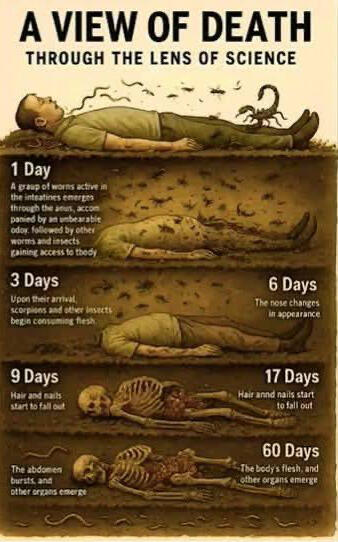
Childhood and Death in Victorian England
by Sarah Seaton (Author) Format: Paperback
4.2 4.2 out of 5 stars (165)
See all formats and editions
In this fascinating book, the reader is taken on a journey of real life accounts of Victorian children, how they lived, worked, played and ultimately died. Many of these stories have remained hidden for over 100 years. They are now unearthed to reveal the hardship and cruel conditions experienced by many youngsters, such as a travelling fair child, an apprentice at sea and a trapper. The lives of the children of prostitutes, servant girls, debutantes and married women all intermingle, unified by one common factor death. Drawing on actual instances of Infanticide and baby farming the reader is taken into a world of unmarried mothers, whose shame at being pregnant drove them to carry out horrendous crimes yet walk free from court, without consequence. For others, they were not so lucky. The Victorian children in this publication lived in the rapidly changing world of the Industrial Revolution. With the introduction of the New Poor Law in 1834 the future for some pauper children changed but not for the better. Studies have also unearthed a religious sect known as the Peculiar People and gives an insight into their beliefs. This book is not recommended for those easily offended as it does contain graphic descriptions of some child murders, although not intended to glorify the tragedies, they were necessary to inform the reader of the horrific extent that some killers went to. This book will appeal to anyone with an interest in the social history of the Victorian period.(https://www.amazon.co.uk/Childhood-Death-Victorian-England-Seaton/dp/1473877024/ref=sr11?crid=MQQ0CCYMAEB8&dib=eyJ2IjoiMSJ9.gLuCxp5NEaHcUG80JXnjeK7SwoWx90HsjN2OB70eOwE3T90fytGatiedjYfB5BX3i8hVfKYh9H-kLAuLPMoGR80lK9X6aBykrYrEfB2st4.i9lG0pyc8pe5mwRRj65BJNc59Sguw5Rjyj7fiHqic&dibtag=se&keywords=childhood+and+death+in+victorian+england&qid=1774454405&sprefix=childhood+and+death+in+victorian+england%2Caps%2C237&sr=8-1)